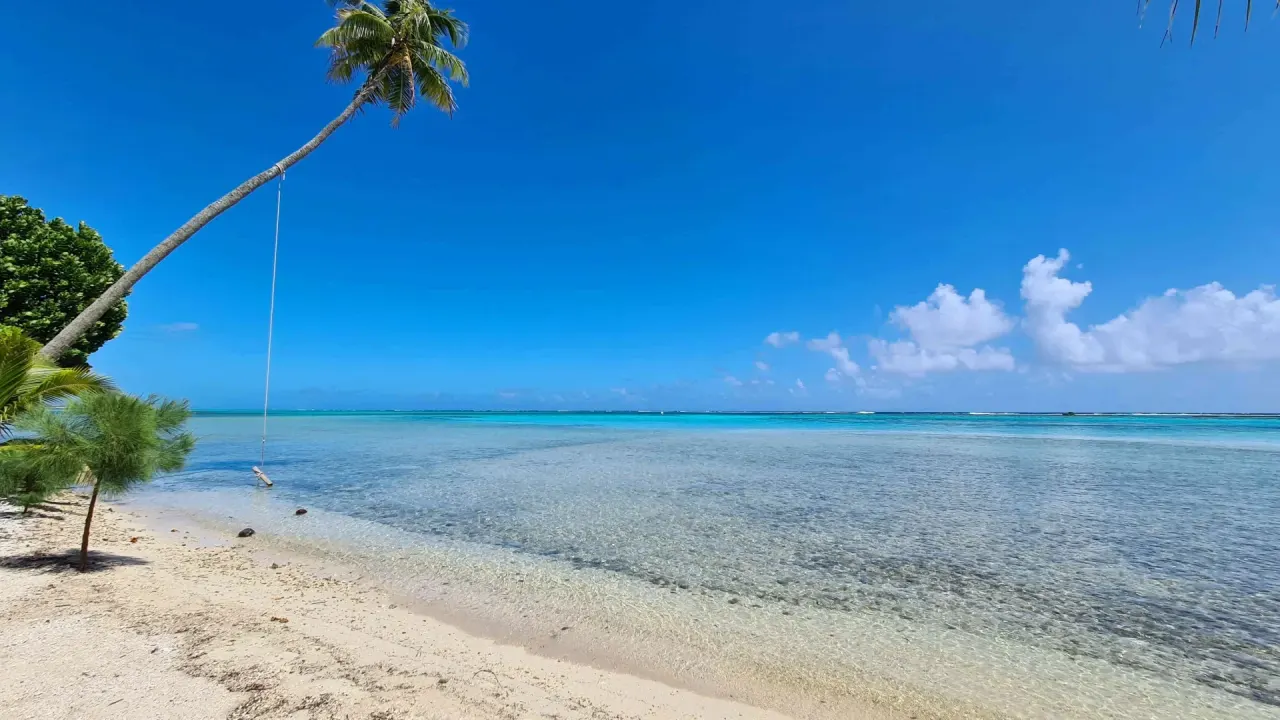
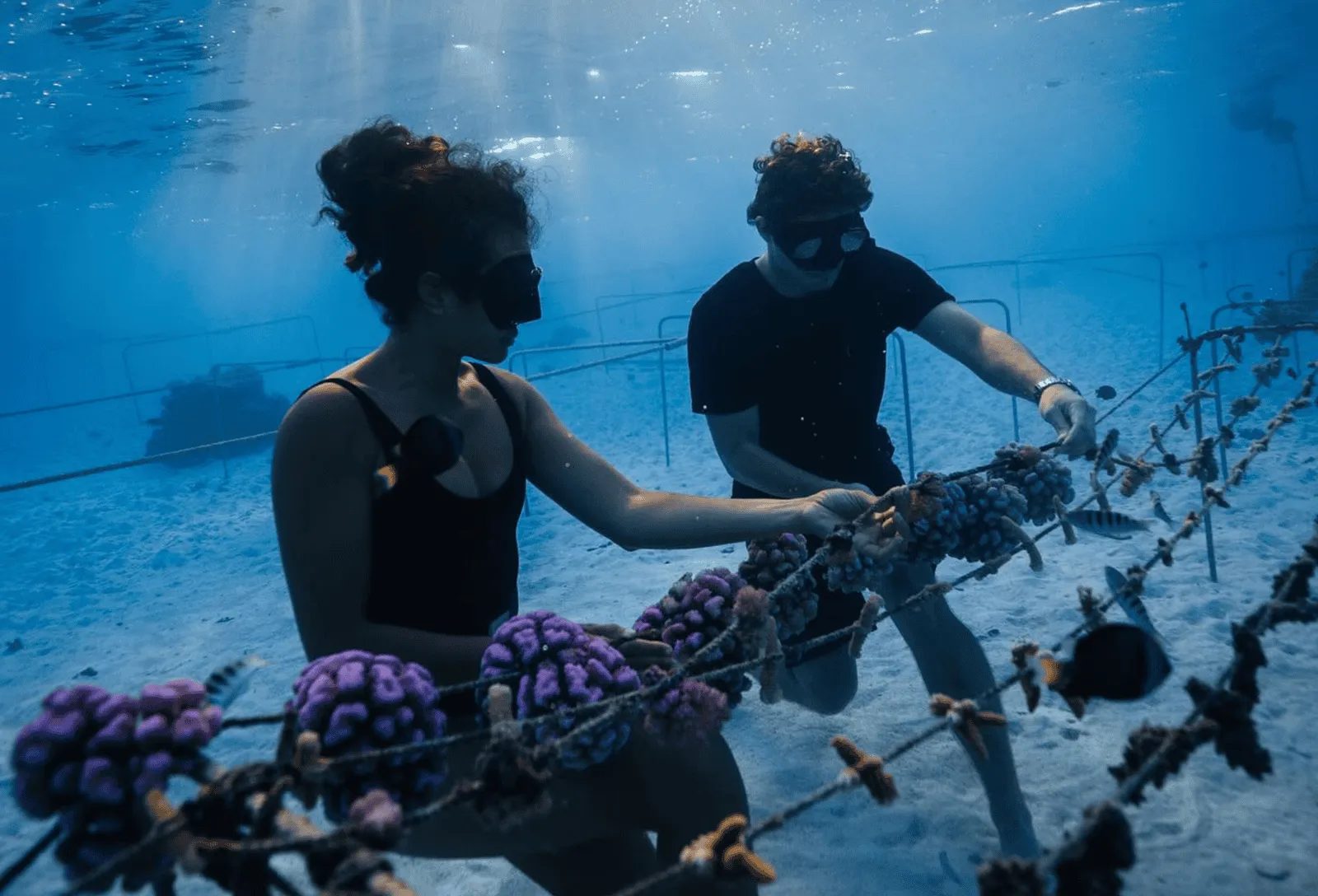
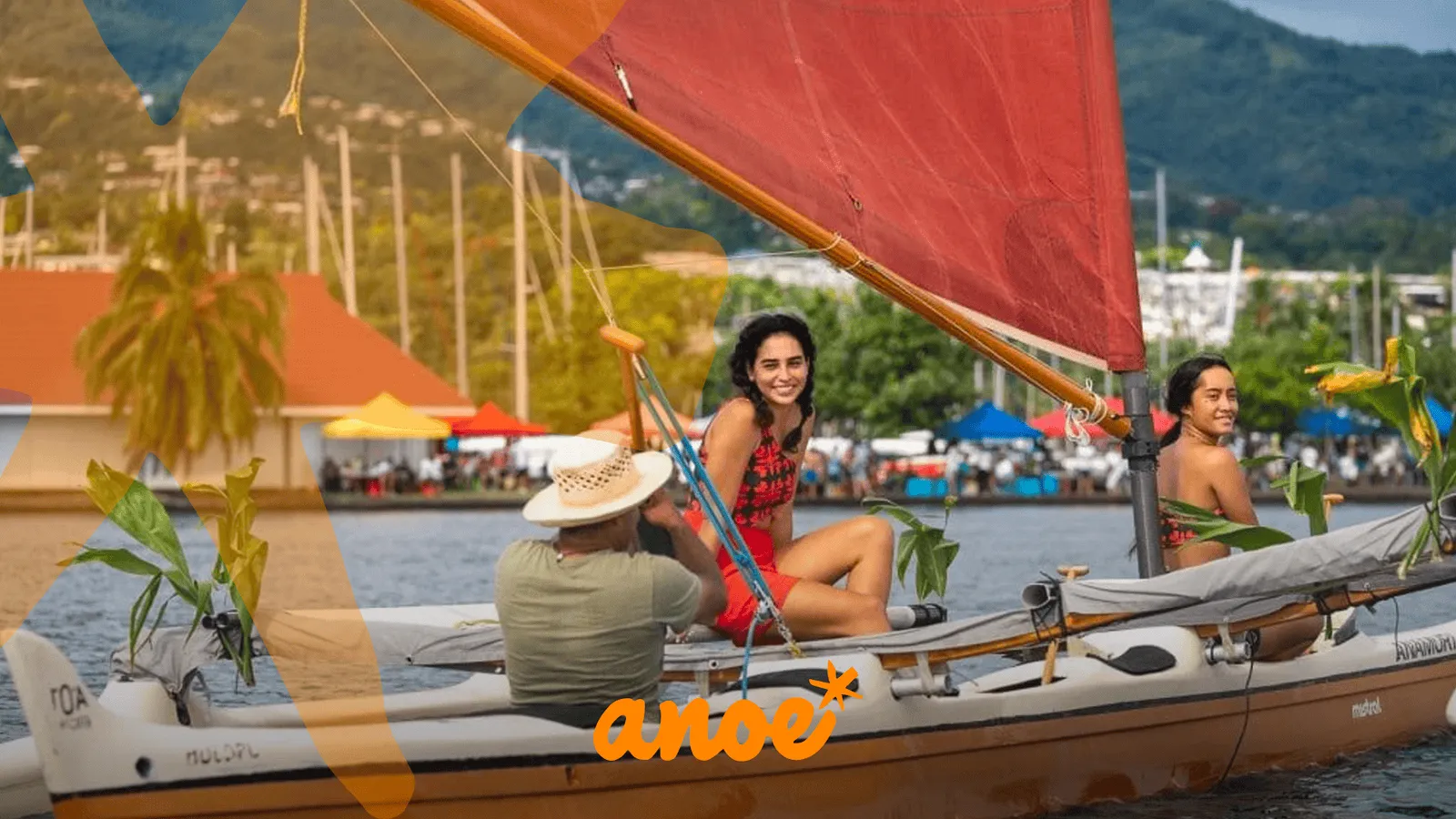
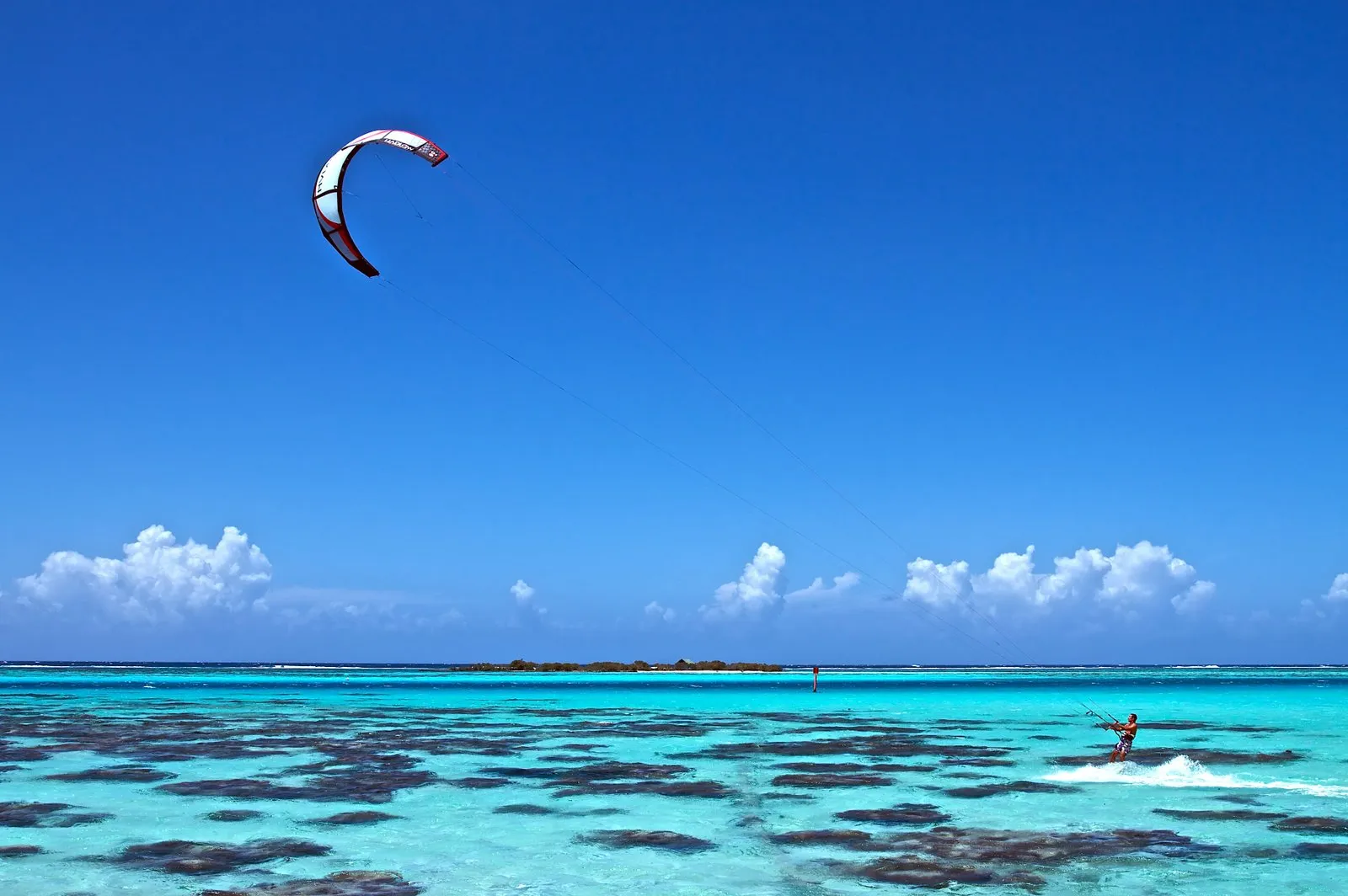
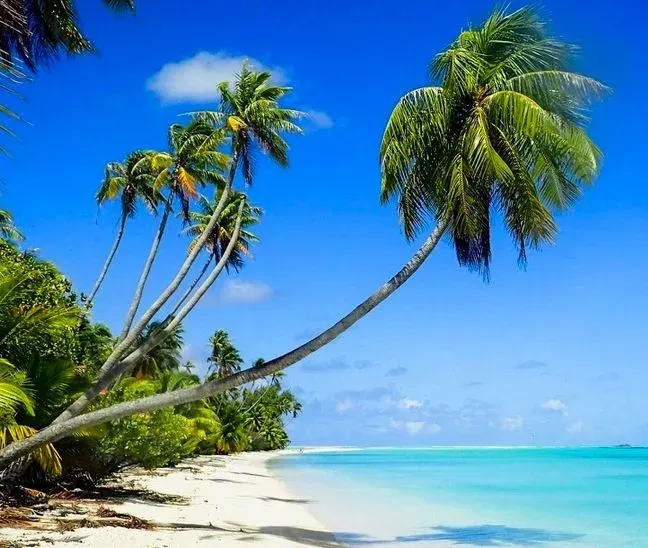
Just 30 minutes by ferry from Tahiti, Moorea is famous for its jagged volcanic peaks, emerald mountains, and one of the world's most beautiful lagoons. Visitors come for whale watching (July-November), snorkeling with rays and sharks, scenic hikes, ATV tours, and relaxed beachfront resorts.
Moorea in pictures
Tahiti Tourisme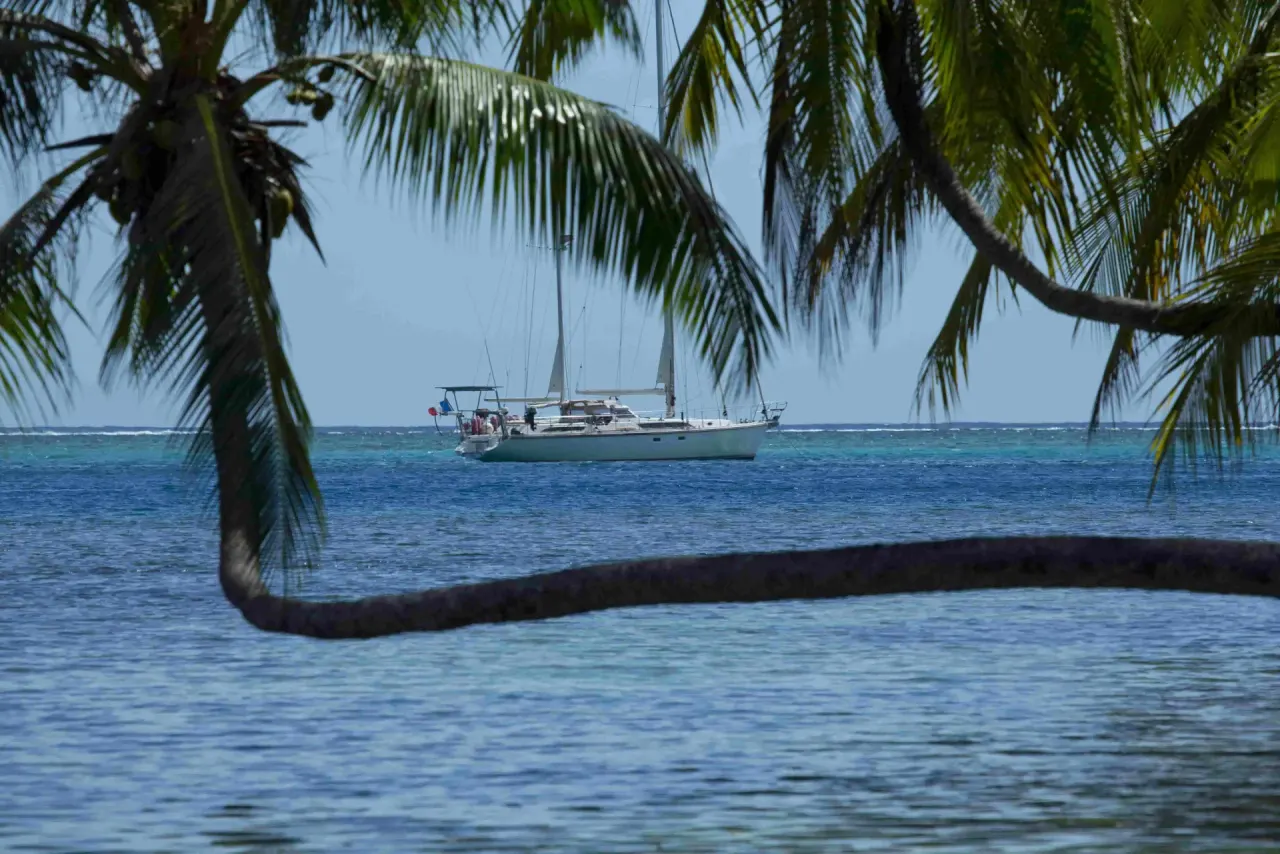 Tahiti Tourisme
 Tahiti Tourisme
Places on Moorea
15The lookout at the top of the Opunohu valley road.
The lookout at the top of the Opunohu valley road. From here you see Mount Rotui with a bay on each side, Cook’s Bay to the left and Opunohu Bay to the right. Several valley trails start from the car park.
A Neapolitan pizzeria at Haapiti, on Moorea’s west coast.
A Neapolitan pizzeria at Haapiti, on Moorea’s west coast. Wood-fired pizzas and fresh pasta made in house.
A restaurant on a motu off Moorea’s north-west coast, reached by a short boat ride.
A restaurant on a motu off Moorea’s north-west coast, reached by a short boat ride. Lunch is fresh fish or a salad with your feet in the water.
The beach restaurant of the Sofitel Kia Ora at Temae, on Moorea.
The beach restaurant of the Sofitel Kia Ora at Temae, on Moorea. Dinner with your feet in the sand and a menu that mixes Polynesian and French cooking.
The spa of the Sofitel at Temae, set in a tropical garden a few steps from the lagoon.
The spa of the Sofitel at Temae, set in a tropical garden a few steps from the lagoon. Treatments use cold-pressed oils with local ingredients such as coconut, vanilla and avocado.
The agricultural school in the Opunohu valley, on the road up to the lookout.
Open in MapsThe agricultural school in the Opunohu valley, on the road up to the lookout. Its shop sells what the students grow and make on the land: jams, juices, fruit and honey.
Open in MapsIn depth
Moorea: everything you need to know before you go
The practical guide to Tahiti's neighbour: ferries, seasons, the lagoon, the interior - and who Moorea is really for.
Moorea is the island you can see from Papeete's waterfront, just across the channel. It is the easiest escape in French Polynesia - green, dramatic, organised for visitors - and at the same time a real island where people farm pineapples, go to school and stop for baguettes on the coast road.
Where is it?
Moorea sits about 17 kilometres northwest of Tahiti, across the stretch of water Polynesians call the Sea of the Moon. Its skyline is a row of sharp volcanic peaks around two deep bays, Cook's Bay and Opunohu Bay, with a lagoon and a string of motu (small reef islets) on the northwest side.
How do you get there?
Most travellers come by ferry from downtown Papeete: Aremiti, Vaeara'i and Tauati all make the crossing, which takes around forty minutes. Cars, scooters and bikes travel on the same boats. There is also a short hop by plane from Tahiti's airport for those connecting onwards. Once on Moorea, one coastal road of about sixty kilometres rings the island - most visitors rent a car, a scooter or an e-bike, because buses are few.
When should you go?
The drier, cooler season runs roughly May to October and is the most comfortable for hiking and lagoon days. November to April is warmer and wetter, greener too, with fewer visitors outside the holiday weeks. Humpback whales pass through Polynesian waters from about July to November - Moorea is one of the best places in the world to see them.
What to do
- Live the lagoon. The sandbanks off the northwest coast are famous for blacktip reef sharks and stingrays gliding in waist-deep water. Snorkelling, paddling and lagoon tours leave from all along the coast.
- Meet the whales. In season, licensed boats take small groups out beyond the reef. Choose an operator who respects approach rules - the encounter is better for everyone, whale included.
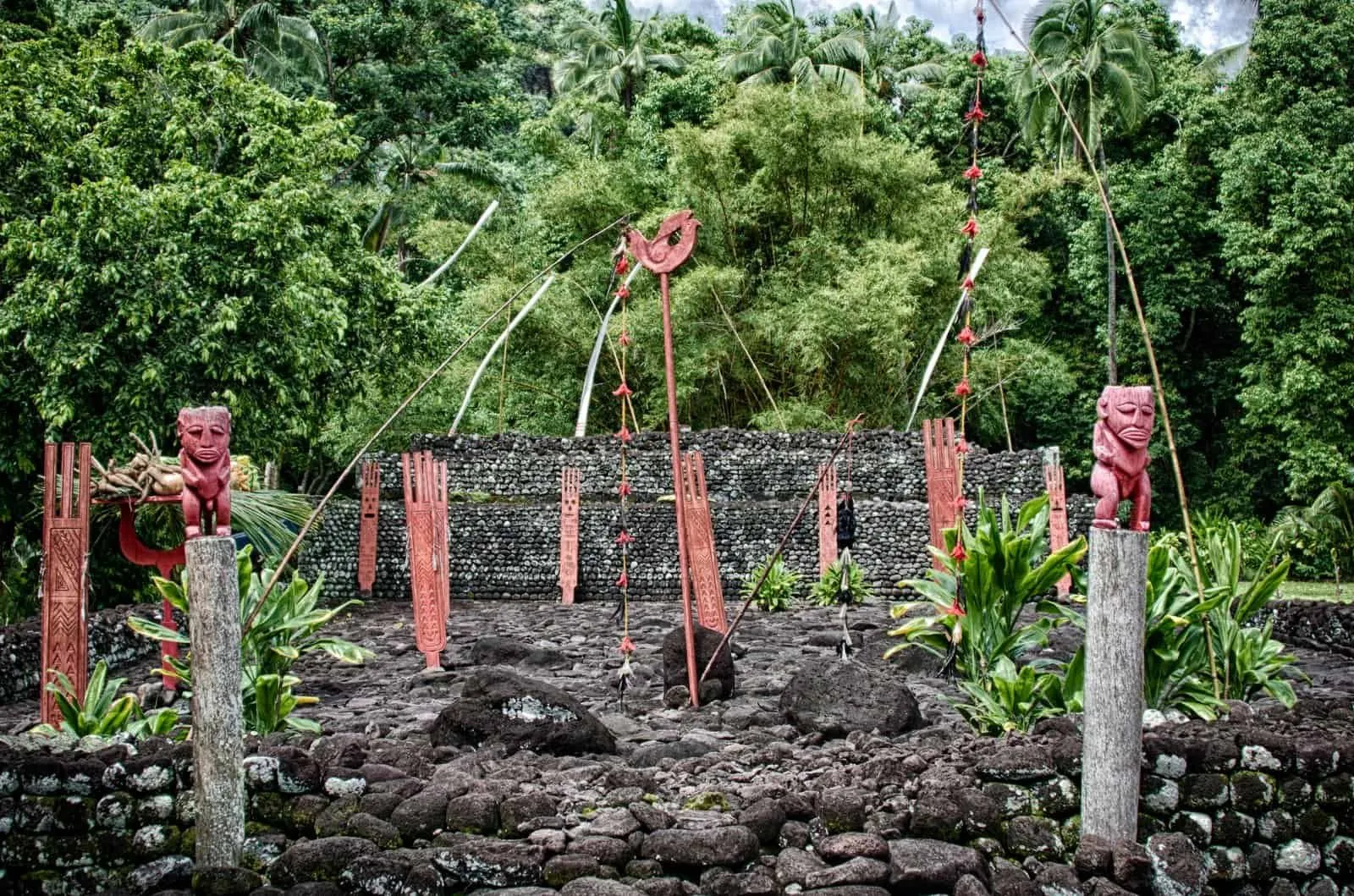
- Climb to the Belvedere. The lookout above Opunohu Valley faces both bays at once, with Mount Rotui between them. The road up passes pineapple fields and some of the island's restored marae (pre-European temple platforms).
- Walk into the interior. Trails like the Three Coconuts pass cross the green heart of the island - shaded, muddy after rain, and worth every step.
- Go around the island. Take the coast road slowly: fruit stands, churches, surf breaks at Haapiti, and a different mountain profile at every kilometre.
Where to stay
The northwest corner (Hauru Point and Tiahura) has the beaches and most of the lagoon activity. Cook's Bay and Maharepa are the island's little hub, handy for shops and the ferry road. Haapiti on the west coast is quieter and loved by surfers. You'll find every type of stay, from family pensions - often the warmest way to meet the island - to resorts on the lagoon.
Is Moorea for you?
Moorea is the right island if you want mountains and lagoon in the same day, real village life, and things to do every single day of your stay. It is not the island for total seclusion: it is close to Tahiti, well visited, and the coast road is a living road. If what you're after is atoll silence and nothing on the horizon, look at the Tuamotu - and come to Moorea to be busy outdoors.
Practical tips
- Rent your wheels early in high season - the island is bigger than it looks from the ferry.
- Bring reef-safe sunscreen; the lagoon is the island's treasure.
- Carry some cash for fruit stands and small snacks.
- Trails cross private or protected land in places - stay on the path, and go with a guide for the interior routes.
- Sunday morning is quiet: shops close, churches sing. Plan around it, or better, listen.
That is Moorea.
5 places · 17 guides · 6 things to know
Also nearby
Stories · 6 min
The Incredible Story of Don the Beachcomber: From Hollywood to the Lagoons of Moorea
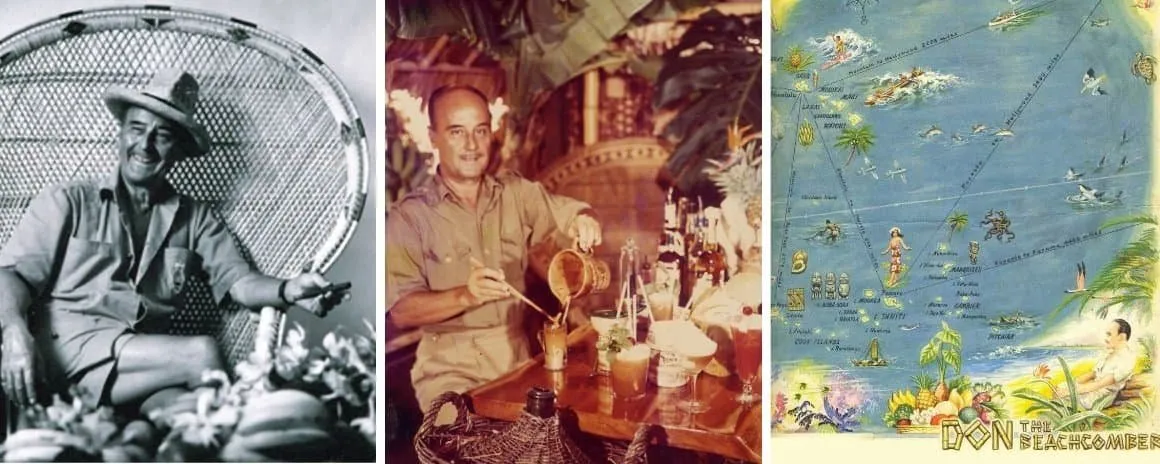
When the name Don the Beachcomber(1907-1989) comes up, it usually sparks images of floral shirts and legendary Zombie or Mai Tai cocktails. It’s true - Ernest Gantt (who legally became Donn Beach) is the founding father of the « Tiki » culture that once swept across America.
But for those of us here in the Fenua, the story is quite different. It isn’t just the tale of a world-famous bartender; it’s the story of an inventor and an ocean lover who spent his final years in Moorea with a wild ambition: to reinvent life on the water.
Today, thanks to rare archives from 1976, I’m taking you on a journey to discover his ultimate dream: the « Floating Fare. »
1929-1933: The birth of a legend
It all began with a journey. Born in New Orleans, Ernest Gantt made his first visit to Tahiti in 1929 while en route to Hawaii on a cruise ship. He fell head over heels for « everything Pacific. »
He returned to the United States with one obsession: recreating that island magic.
The world’s first « Tiki Bar » (Los Angeles)
In 1933, as Prohibition came to an end, he opened a tiny bar in Hollywood on McCadden Place, simply named « Don the Beachcomber ». He decked out the space with treasures from his travels: weathered fishing nets, driftwood, and Polynesian spears.
While the Hollywood elite were sipping champagne, Donn offered a total escape with his « Rum Rhapsodies » - complex cocktails designed to wash away urban stress. The success was metevolent, providing the funds he needed to head back to the « real » paradise.
For the history buffs: The story of the original bar and its vintage menu: Atomic Grog History Read more on Anoe: Tiki Culture: The Hollywood Dream vs. the Reality of Tahiti’s Islands Read more on Anoe: The Overwater Bungalow: The Invention that Changed « Paradise »
From New Orleans to the Southern Lagoons
Donn’s love affair with the Pacific was no passing fling. Born in New Orleans, he first stepped foot on Tahitian soil back in 1929 during a sea voyage, well before the end of Prohibition in the United States.
After amassing a fortune in Hollywood and Waikiki with his famous International Market Place, he decided to return to the source. He was done with cardboard movie sets; he craved the authentic Pacific.
As he shared with the Honolulu Star-Bulletin: « It’s my own little world of escape… A place where you want to be alone or just with friends. »
Project « Marama »: A Masterpiece of Naval Architecture
This is where the story becomes truly fascinating for fans of architecture and seafaring. Donn Beach didn’t want to build just another hotel on the beach. He collaborated with Herb Kane, the renowned artist and vice president of the Polynesian Voyaging Society (the very same people who revived traditional navigation with the Hōkūleʻa canoe), to design a unique vessel.
This boat, often referred to as the Marama, was a prototype for a floating Tahitian Fare:
- Dimensions: A 42-foot catamaran (roughly 13 meters) boasting a living space of 800 sq ft (74 m²).
- Design: It resembled a traditional thatched-roof hut but was packed with modern comforts: a fully equipped kitchen, a full bathroom, and wall-to-wall carpeting.
- Major Innovation: In the center of the living room sat a glass-bottom table with a removable top, allowing guests to view and touch the lagoon water without ever leaving the sofa.
For naval history enthusiasts: You can view rare photos of this houseboat and its construction on the specialized site Don Beachcomber’s Marama History.
A Visionary Philosophy: « Reversing the View »
Why live on the water? In his 1976 interview, Donn Beach theorized the very concept that would later cement the success of overwater bungalows - though his particular vision was entirely mobile.
His idea was simple yet brilliant:
« Visualize yourself on a lagoon… Instead of looking out from a hotel room on an island toward the sea, the situation is reversed. »
He wanted visitors to be able to admire « a palm-fringed beach, white sand beneath towering green mountains » from the perspective of the ocean, completely secluded 200 or 300 yards from the shore.
His initial plan was ambitious: to tow this prototype to Tahiti and create a fleet of 50 floating fares anchored in the lagoons of Moorea and Bora Bora.
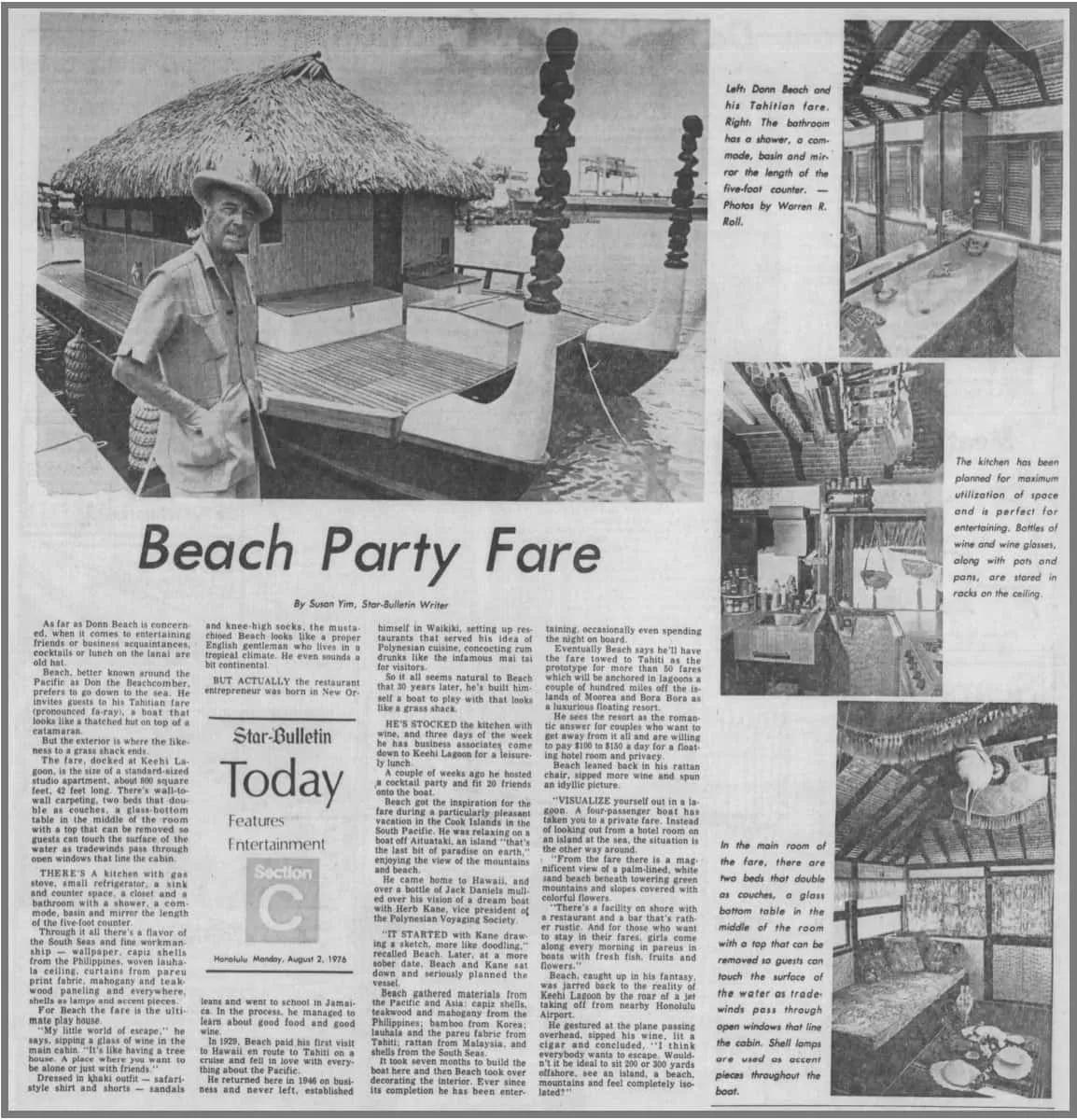
Par Susan Yim, Rédactrice au Star-Bulletin
Honolulu, Lundi 2 août 1976
A Life as a « Gentleman of the Tropics » in Moorea
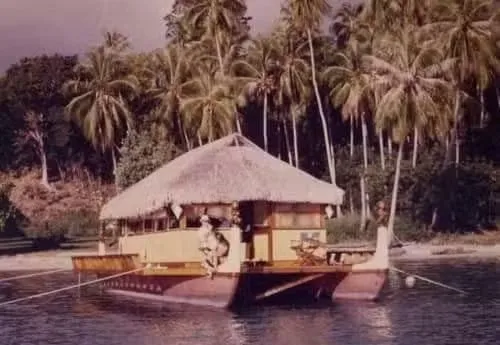
While the fleet of 50 vessels never materialized on an industrial scale, Donn Beach truly lived his dream. He successfully brought his prototype to French Polynesia.
He lived aboard, navigating through the waters of Cook’s Bay and Opunohu Bay. He decorated the interior with materials sourced from across the Pacific: Tahitian Pareu fabric, woven Lauhala for the ceilings, Philippine mahogany, and bamboo from Korea.
He hosted friends and business associates for memorable lunches, dressed in his signature khaki safari suit, cultivating his persona as a gentleman explorer until the very end of his life.
The Legacy Today
Ernest Gantt passed away in 1989 and rests at the National Memorial Cemetery of the Pacific in Honolulu, but his spirit still drifts across our waters.
Today, whenever you see leisure catamarans dropping anchor in Moorea’s lagoon, or when you stay in a retreat over the water, you are experiencing a piece of the vision he had before anyone else: a life centered on the beauty of the island as seen from the sea.
Want to dive deeper into Tiki culture? Be sure to visit the landmarks that keep this aesthetic alive, or immerse yourself in the definitive guides on Tiki Culture.
The Tiki Library: Essential Reading
If the story of Don the Beachcomber has sparked your curiosity, here are the must-read books (mostly in English, the movement’s original language) to dive deeper into the legend:
1. The Historical Bible: « Sippin’ Safari »
- Author: Jeff « Beachbum » Berry
- Why read it: This is THE definitive resource on Don the Beachcomber. The author spent years tracking down Donn’s former bartenders to reconstruct the history and decode the secret recipes (which were originally written in code to prevent theft!). It features rare archival photos and the most comprehensive biography of Ernest Gantt ever published.
- Reference link: Sippin’ Safari - 10th Anniversary Edition
2. The Visual Bible: « The Book of Tiki »
- Author: Sven Kirsten
- Why read it: Sven Kirsten is the urban archaeologist credited with rediscovering Tiki culture in the 90s. This book is a visual masterpiece, compiling menus, postcards, and architectural photography (including the Tahara’a and Donn’s various projects). It is the very book that reignited the global Tiki craze.
- Reference link: Taschen - The Book of Tiki
3. Culinary Authenticity: « Hawaii Tropical Rum Drinks & Cuisine »
- Authors: Don the Beachcomber & Phoebe Beach
- Why read it: To cook just like they did aboard the Marama! This frequently reprinted book compiles the master’s classic recipes. Phoebe Beach, Donn’s wife who lived with him on the houseboat in Moorea (and who appears in our archival photos), played a vital role in preserving this culinary legacy.
- Availability: Often found as second-hand copies or new editions on Amazon.
Written by Ruben Chang
Read next
6 min
Read next