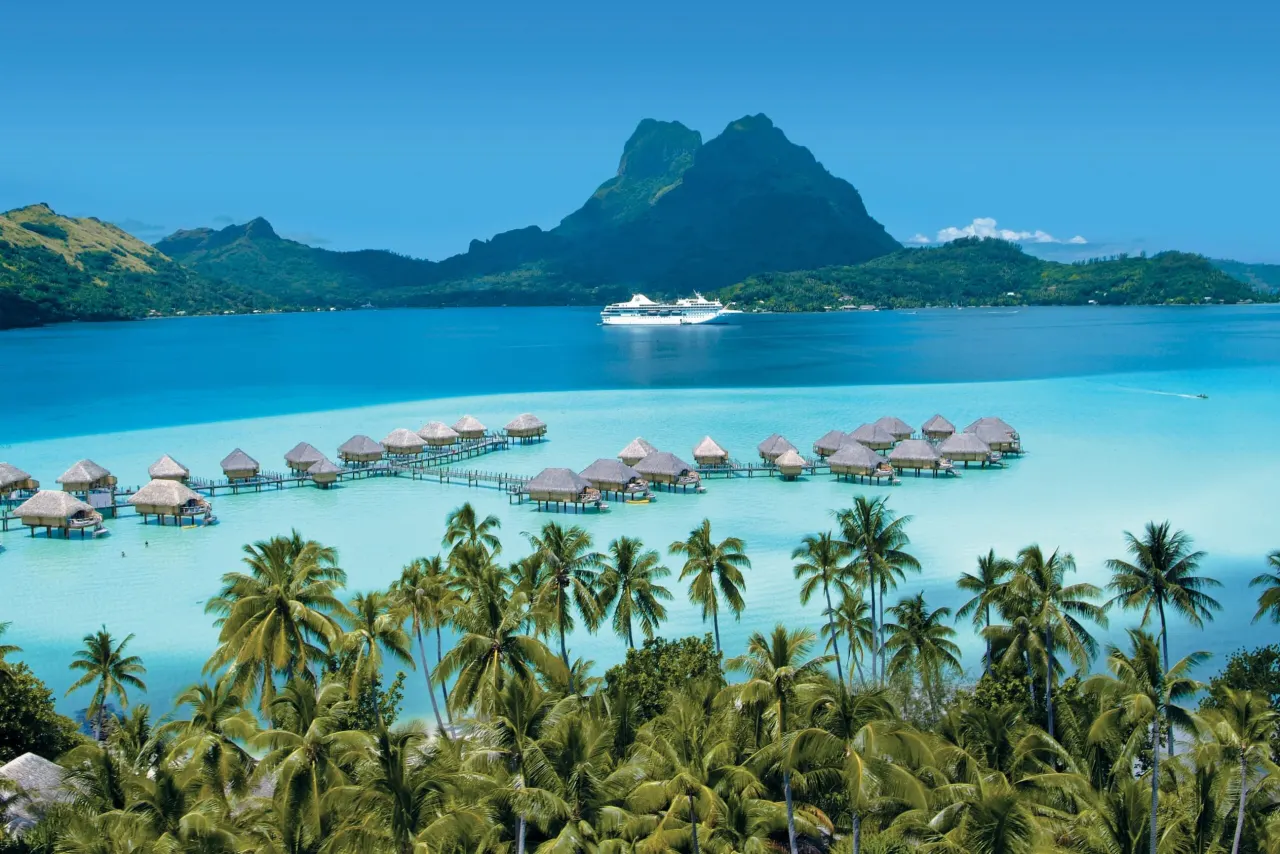
Known worldwide for its dazzling turquoise lagoon and luxury overwater bungalows, Bora Bora is French Polynesia's most iconic honeymoon destination. Beyond luxury, the island offers excellent snorkeling, shark and ray safaris, lagoon cruises, paddleboarding, and panoramic views from Mount Otemanu.
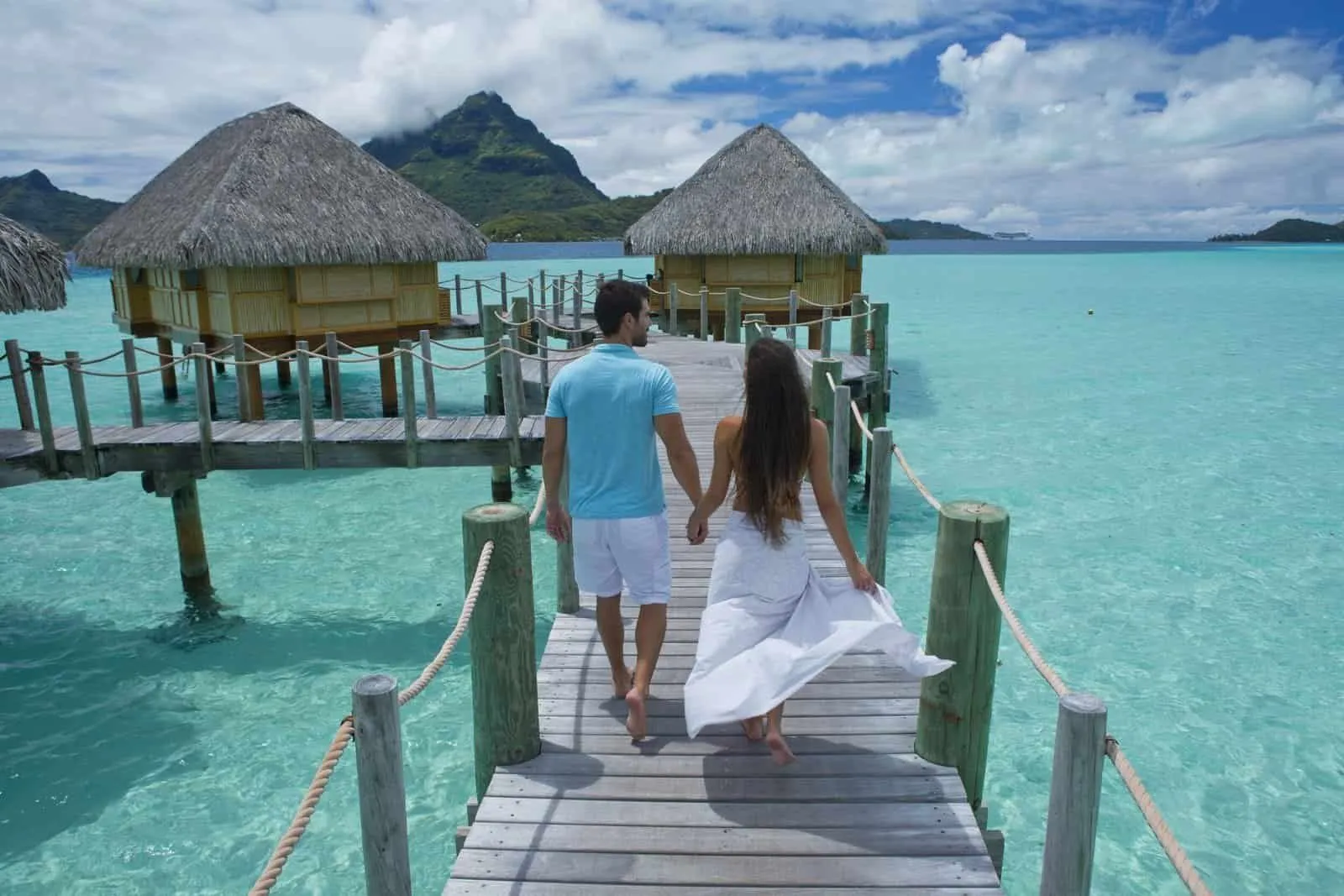 What to do in Bora Bora? Itinerary for a dream vacation in paradise3 min
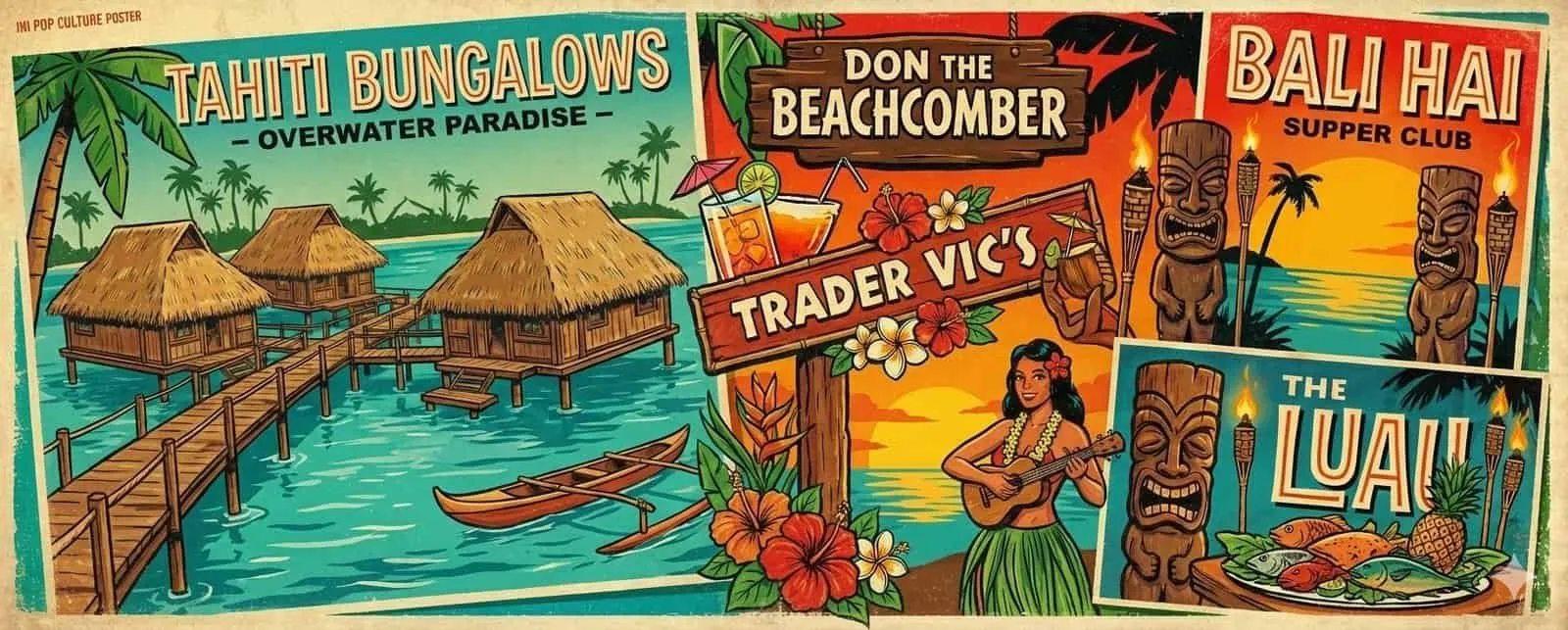 Stilted bungalows, the invention that changed “Paradise”Culture · 2 min
Bora Bora in pictures
Tahiti Tourisme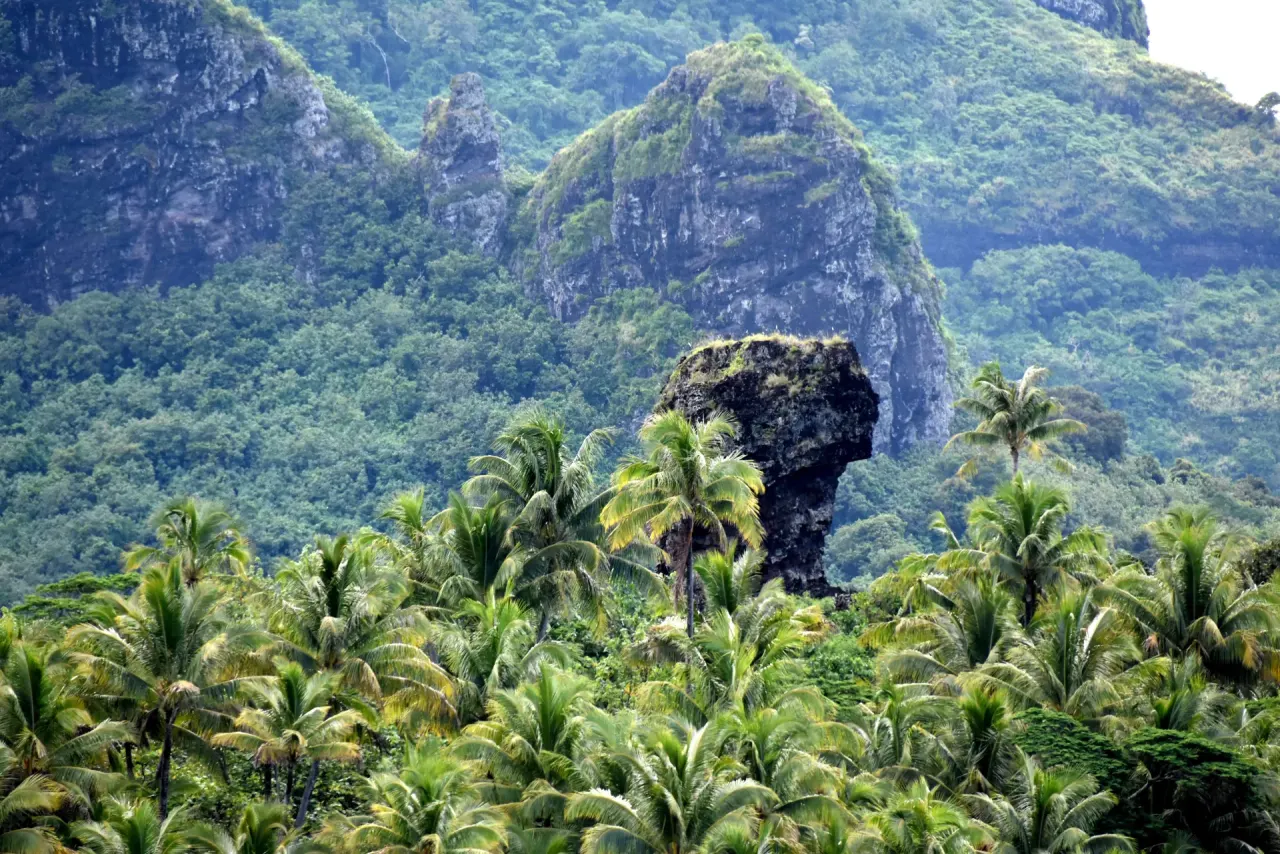 Tahiti Tourisme
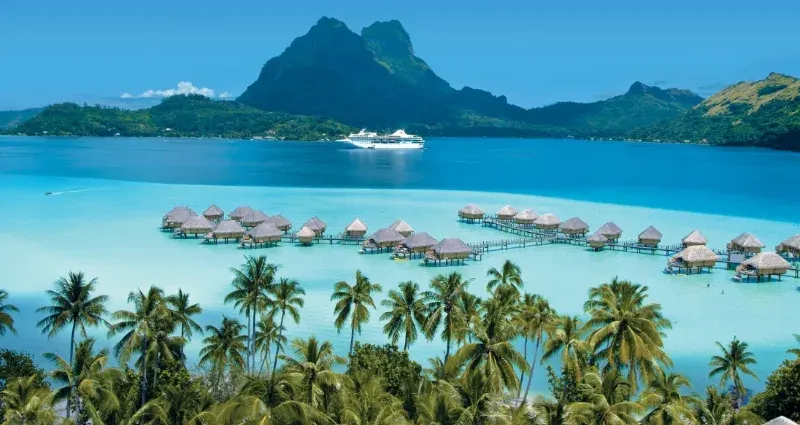 Tahiti Tourisme
Places on Bora Bora
1A pearl farm at Faanui on Bora Bora, facing Mount Otemanu.
A pearl farm at Faanui on Bora Bora, facing Mount Otemanu. You get an introduction to pearl farming, a guided snorkel over the coral garden, then you choose your oyster and keep the pearl inside it.
In depth
Bora Bora: everything you need to know before you go
Getting there, the right season, what a lagoon day looks like - and how to do the famous island on a normal budget.
Bora Bora is the most famous island in the Pacific, and the photos are not lying: the lagoon really is that colour. Behind the resort image there is also a real island - a village called Vaitape, a single coast road, and a mountain that watches over everything.
Where is it?
Bora Bora sits in the Leeward Islands, about 260 kilometres northwest of Tahiti. It is one main island wrapped in a ring of motu (reef islets), all around a lagoon dominated by Mount Otemanu's dark tooth of rock.
How do you get there?
You fly. The hop from Tahiti takes under an hour, and the airport sits on a motu at the edge of the lagoon - the arrival by boat shuttle across the water is the first postcard of the trip. Resorts collect their guests directly; everyone else crosses to Vaitape, the main village.
When should you go?
May to October is drier and a touch cooler - the classic season. November to April is warmer, wetter and quieter. The lagoon itself is swimmable all year.
What to do
- Take a lagoon tour. Rays and blacktip reef sharks in clear shallow water, coral gardens, a motu picnic - this is the day most people remember.
- Swim at Matira. The main island's great public beach: a long curve of sand sliding into warm, waist-deep water.
- Go under the surface. Snorkellers and divers share the lagoon with manta rays; outside the reef the water drops away into the blue.
- Ride into the interior. A 4x4 track climbs to viewpoints and to cannons left behind by the Second World War, when the island was an American supply base.
- Circle the island. The coast road is about 32 kilometres - a slow morning by bike or scooter, with the mountain changing shape the whole way round.
Where to stay
The famous overwater resorts sit on the motu, facing the main island. On the island itself, around Vaitape and Matira, family pensions and small hotels offer the affordable way to live Bora Bora - and put you closer to shops, food trucks and the beach.
Is Bora Bora for you?
Bora Bora is the island for a moment that deserves a frame: a honeymoon, an anniversary, a once-in-a-while treat. It delivers its promise. It is also the busiest and most expensive island in French Polynesia, and its rhythm is built around visitors. If you're travelling on a tight budget, the pensions make it possible. If you're after quiet local life, look at Maupiti or Huahine - or come here for the lagoon and go there for the rest.
Practical tips
- Book well ahead for the dry season - the island fills up.
- Vaitape has shops, banks and pharmacies; stock up before heading to a motu.
- Bring reef-safe sunscreen and reef shoes for the shallows.
- A lagoon tour is worth choosing carefully: small groups treat the animals better.
That is Bora Bora.
6 guides · 1 things to know
Also nearby
Stories · 2 min
Stilted bungalows, the invention that changed “Paradise”
People often think that the stilt house is an ancient Polynesian tradition. Not at all! It is a 100% “system D” invention that originated in 1967. The legendary “Bali Hai Boys” (the three Americans Jay, Muk, and Kel) had a problem with their new hotel on the island of Raiatea. The land had no sandy beach, just a rocky coral shore that was difficult to access.
The genius idea? Since they couldn’t bring the beach to the guests, they brought the guests to the water! They planted coconut tree posts in the lagoon and built the rooms directly above the fish.
To top it all off, they cut a hole in the floor, covered it with glass, and called it the “Tahitian Television.”
What started out as a makeshift solution has, 50 years later, become synonymous with absolute luxury around the world.
The Bali Hai Boys, inventors of the overwater bungalow
The Bali Hai Boys were originally three Californians, all brothers from the University of Southern California fraternity who had well-established careers in 1950s American society:
- Hugh Kelley: a lawyer in Los Angeles and sailing enthusiast. It was a trip in 1959, following a transpacific yacht race, that inspired him to escape to Tahiti.
- Jay Carlisle: stockbroker.
- Donald “Muk” McCallum: head of the family timber business.
Taking the Hollywood myth to its commercial peak, they named their first establishment “Bali Hai” (after James A. Michener’s mystical island, popularized by the musical South Pacific).
Their stroke of genius came in 1967 in Raiatea. Faced with a purely logistical problem - their new property had no beach - it was Hugh Kelley who came up with the idea of adapting the modest local fishermen’s huts: they would build bungalows directly on the lagoon. The concept of the fare (house) on stilts was born. What began as a simple engineering solution became a global symbol of luxury and total seclusion. By detaching the bedroom from the shore, the Bali Hai Boys offered travelers the ultimate bubble of privacy, transforming the ocean into a private, paid-for carpet. They proved that the dream of Paradise Lost could now be bought, encapsulated in a refuge floating perfectly above the coral.
Written by REDSOYU
Read next
2 min
Read next