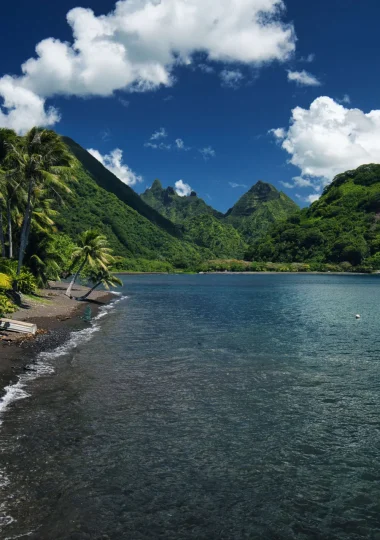
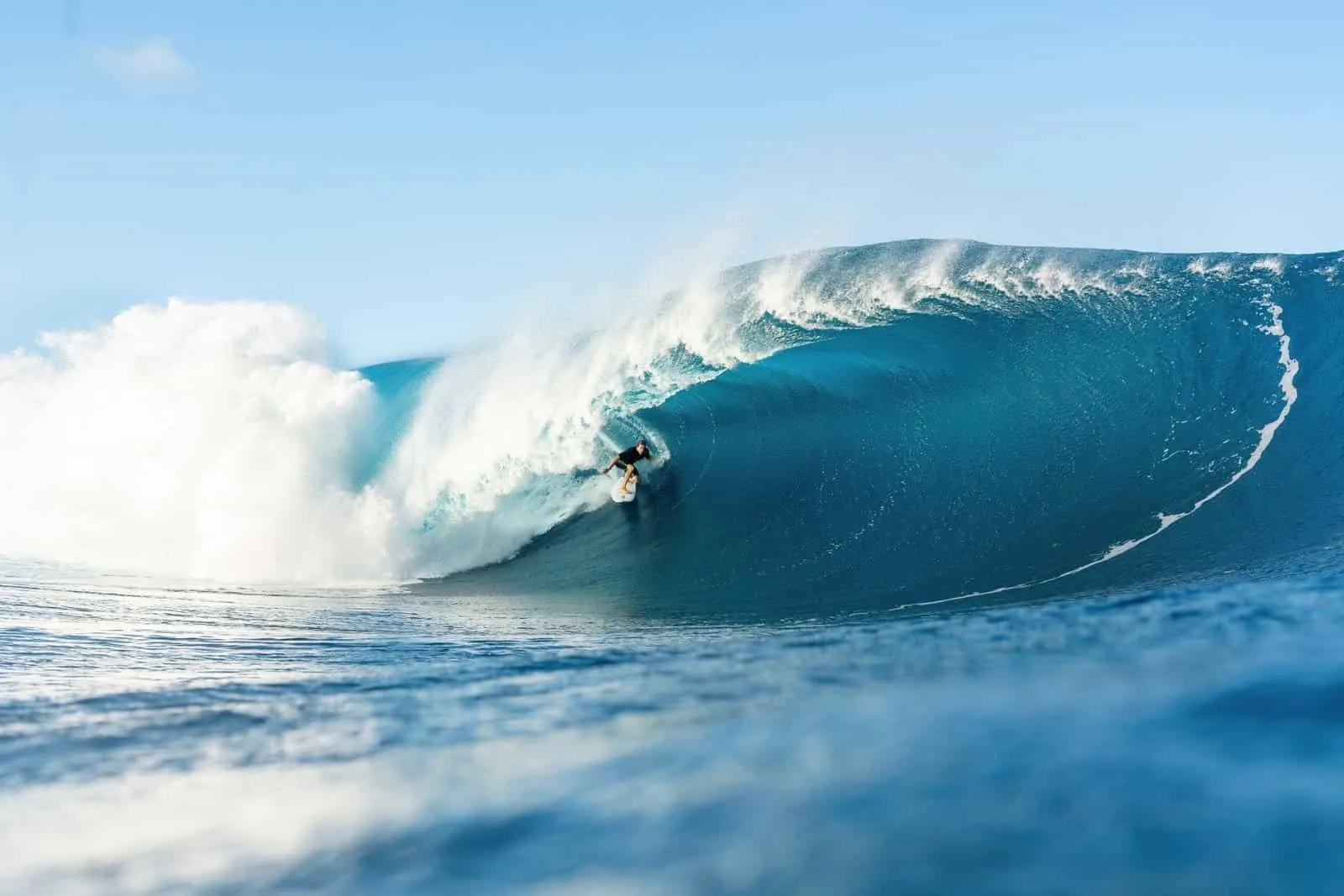
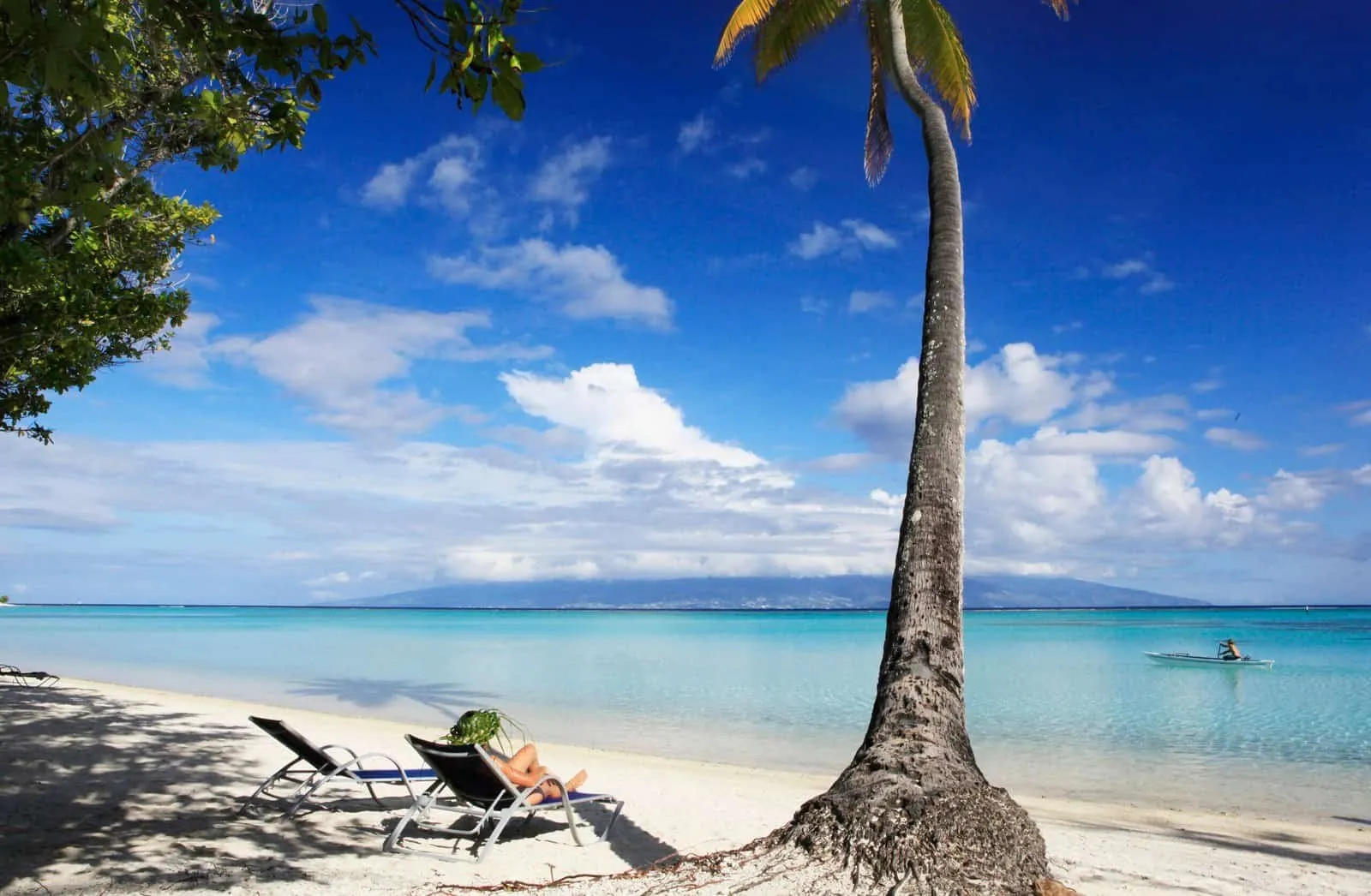
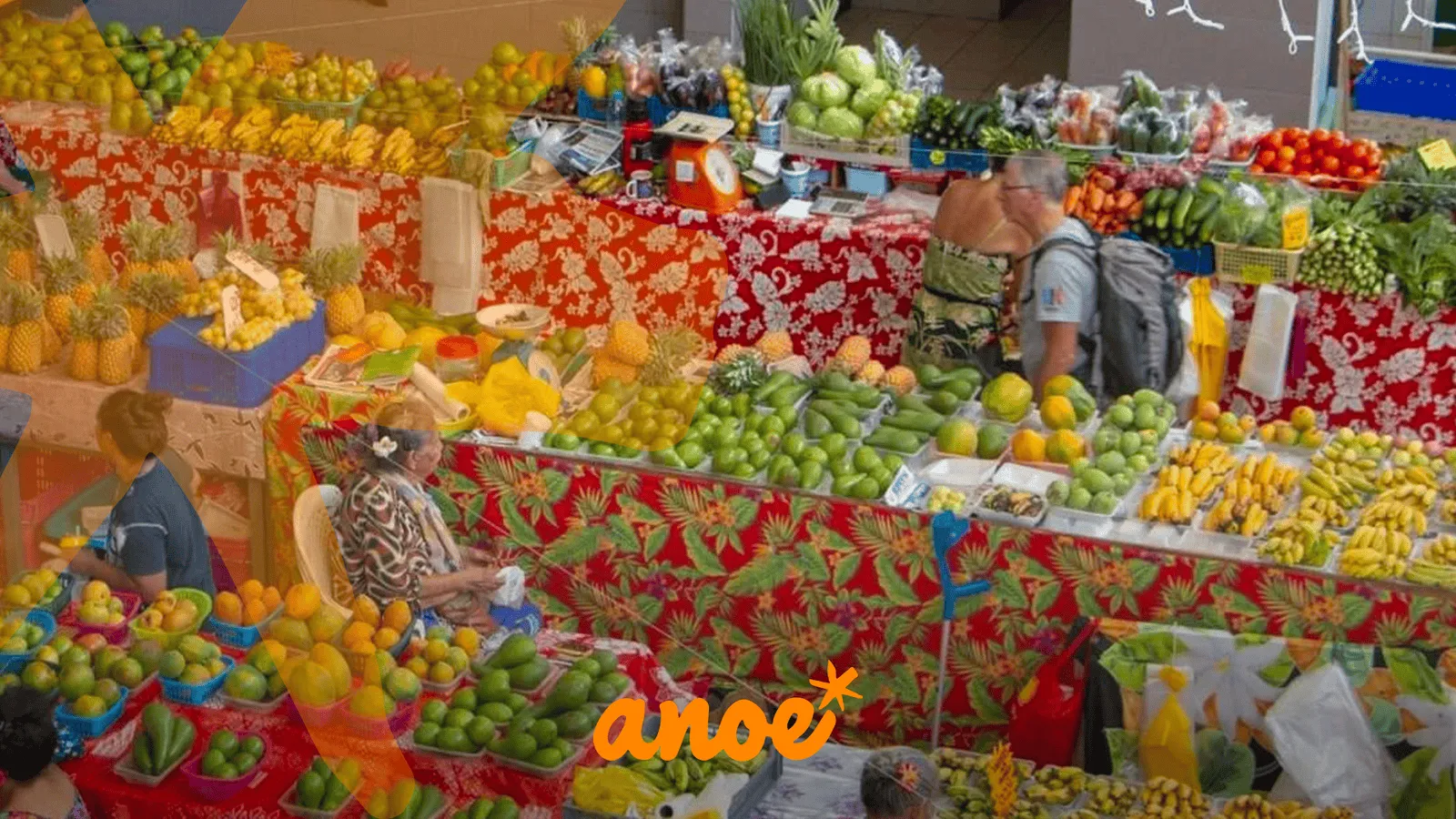
The largest island and international gateway to French Polynesia, Tahiti combines vibrant local culture with spectacular natural scenery. Explore the colorful markets and waterfront of Papeete, hike through lush valleys to waterfalls, surf legendary waves like Teahupo'o, and discover black-sand beaches. It's the best island for experiencing everyday Polynesian life, food, and culture.
Tahiti in pictures
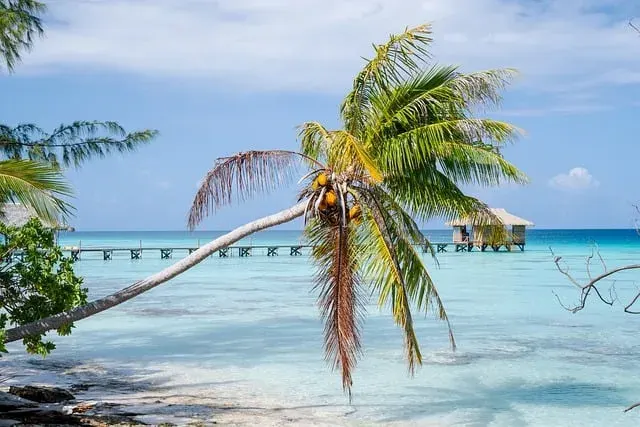 Tahiti Tourisme
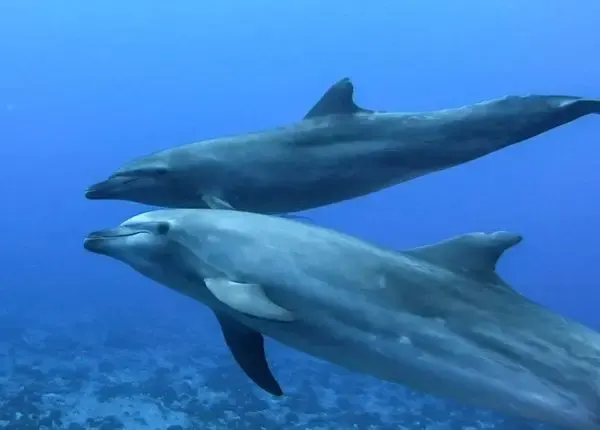 Tahiti Tourisme
Places on Tahiti
55A pareo shop in the centre of Papeete, a few steps from the market.
A pareo shop in the centre of Papeete, a few steps from the market. The pareos are drawn by hand, with patterns that come from nature and from the tifaifai quilts of the grandmothers.
A small restaurant on the lagoon at Punaauia, on Tahiti’s west coast, with Moorea across the water.
A small restaurant on the lagoon at Punaauia, on Tahiti’s west coast, with Moorea across the water. Quiet and intimate, the kind of place for a dinner for two.
The parliament of French Polynesia, behind the main post office in Papeete.
Open in MapsThe parliament of French Polynesia, behind the main post office in Papeete. Its 57 members are elected for five years and vote the country’s laws. The garden around it is open to walk in, and the building stands where the palace of the Pomare queens once was.
Open in MapsA seafood restaurant on the water at Punaauia, on Tahiti’s west coast.
Open in MapsA seafood restaurant on the water at Punaauia, on Tahiti’s west coast. Ask for a table at the end of the pier and you eat with Moorea straight ahead.
Open in MapsA microbrewery in Papeete, open since 2020. Hoa means friend in Tahitian, and the place runs like one: beers brewed on site, concerts and open stages in the evening, and they show you round the brewhouse with a tasting if you ask.
Open in MapsA waterfall deep in the Papenoo valley, on Tahiti’s east coast.
A waterfall deep in the Papenoo valley, on Tahiti’s east coast. You reach it up the valley track, about two hours by electric mountain bike from the valley entrance, with rivers to swim in on the way.
In depth
Tahiti: everything you need to know before you go
Beyond the airport: the market, the valleys, Teahupo'o and the west coast - how to give the main island the days it deserves.
Most visitors use Tahiti as a door to the other islands. Stay a little, and you find the real center of Polynesian life. The biggest island, the highest mountains, the capital, the markets, and the most famous wave in surfing: give Tahiti days, not hours.
Where is it?
Tahiti is the main island of French Polynesia, in the Windward Islands. It is really two round islands joined by a narrow strip of land at Taravao: Tahiti Nui, the big part, with Papeete in the northwest - and Tahiti Iti, the wild peninsula. At its end sits Teahupo'o, where the road stops and the famous wave begins.
How do you get there?
You arrive here: all international flights land at Faa'a, and every island flight and Moorea ferry starts here. The real question is how to get around. Rent a car for the island, and take the ferry for Moorea. Plan extra time on the coast road - it is the only road, and everyone shares it.
When should you go?
May to October is the drier, cooler season. November to April is warm, wet and green. Humpback whales pass from about July to November. The big waves at Teahupo'o also come mostly in the dry months - so surf season and dry season are almost the same.
What to do
- Start at the Papeete market. Two floors of fruit, fish, monoï (the scented coconut oil), flowers and weaving - the island's living room. The market is at its best early in the morning, and earliest of all on Sunday.
- Drive into the valleys. The Papenoo valley cuts through the green heart of the island, past waterfalls and old trails - a 4x4 day trip into a Tahiti most visitors never see. The Faarumai waterfalls, near the north coast, are an easier short walk into the same green world.
- Go to the end of the road. Teahupo'o, at the tip of the peninsula, is a village first and a legend second. From a taxi boat you can watch the surfers on the wave. From the shore, you can feel why they respect it.
- Swim the west coast. Black-sand beaches, sunsets over Moorea, and easy snorkelling along the Punaauia coast. Tahiti's lagoon is simpler to enjoy than people think.
- Eat at the roulottes. In the evening, the food trucks set up and the whole island lines up together: grilled fish, chow mein, crêpes. It is the cheapest good dinner in French Polynesia, and the most local one.
Where to stay
Papeete keeps you close to the market, the ferries and the little nightlife there is. The west coast - Punaauia, Paea - has the beaches, the sunsets and most of the hotels. The peninsula is for surf and quiet. There are family guesthouses all around the island, and they are easy to reach.
Is Tahiti for you?
Tahiti is for travellers who want to see Polynesia at work: a real city, real traffic at rush hour, and under it all, the deepest culture, food and history in the islands. It is not the postcard lagoon - Moorea and the atolls do that better. Give Tahiti two or three days at the start or end of your trip. It may quietly become one of the reasons you come back.
Practical tips
- Rent a car - the island is bigger than it looks, and buses are rare.
- Go to the market early - by mid-morning the best fish and flowers are gone.
- Rain showers pass quickly on the north and east coasts - wait a little before you cancel a plan.
- Much of the interior is protected land - visit the valleys with a local guide.
- Bring a light jacket for the mountains - the interior is much cooler.
That is Tahiti.
23 places · 34 guides · 25 things to know
Also nearby
Stories · 6 min
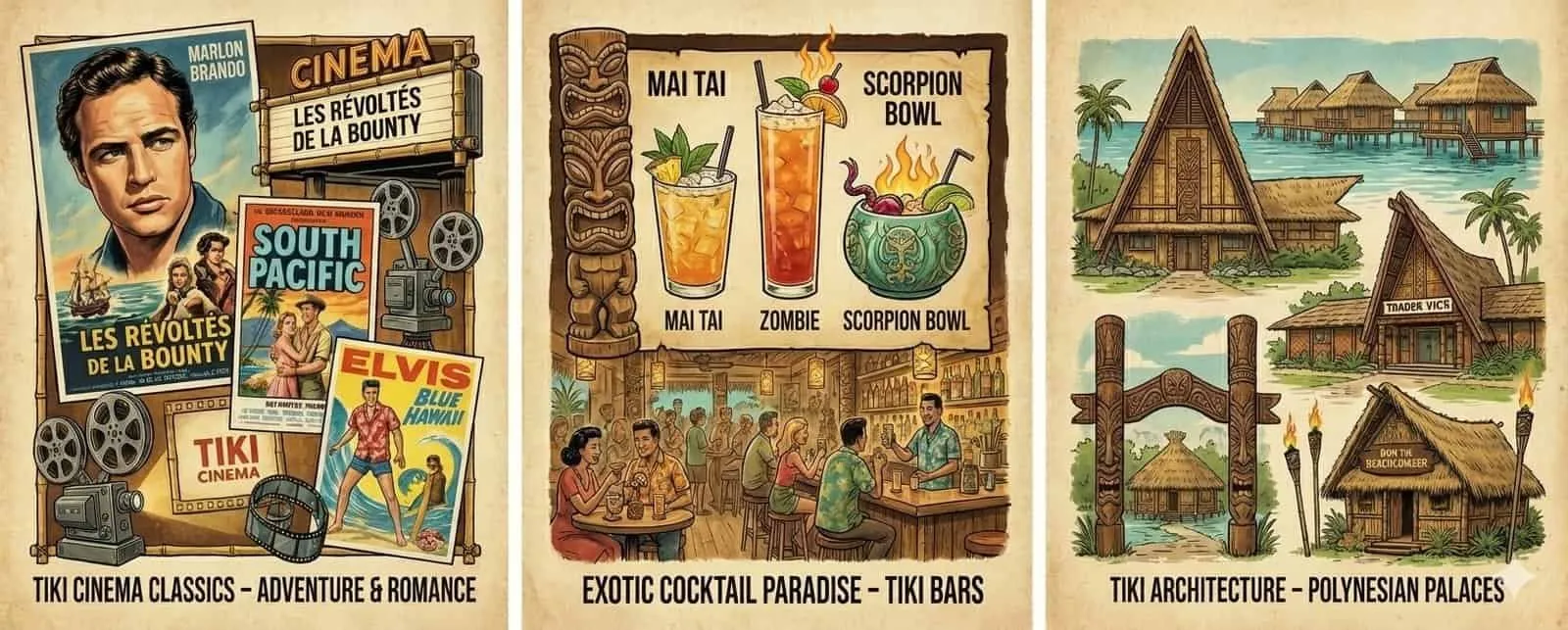
Tiki Culture: The Hollywood Dream and the Reality of the Islands of Tahiti
Why does Tahiti capture the imagination of the whole world? Is it because of its lagoons? Of course. But it’s also because deep down, we are all searching for the same thing: Paradise Lost.
This desire is nothing new. It has been shaped by centuries of stories, then amplified by a dream machine from California: Hollywood. Today, I invite you to untangle myth from reality. To understand how a bar in Los Angeles changed the face of tourism and how the “Bali Hai Boys,” three Californians who invented the overwater bungalow in Raiatea in 1967 to compensate for the lack of beaches, created the global symbol of escape, and how, once here, you can touch something much more powerful than cinema: the real *Mana.*
Polynesian culture: Mana is a key concept in Polynesia. It is a vital energy, a spiritual force that inhabits beings and things. Standing in front of an ancient Ti’i is to connect with this energy. It is an experience of profound well-being, a grounding to the earth.
The birth of the myth: from Bougainville to Don the Beachcomber
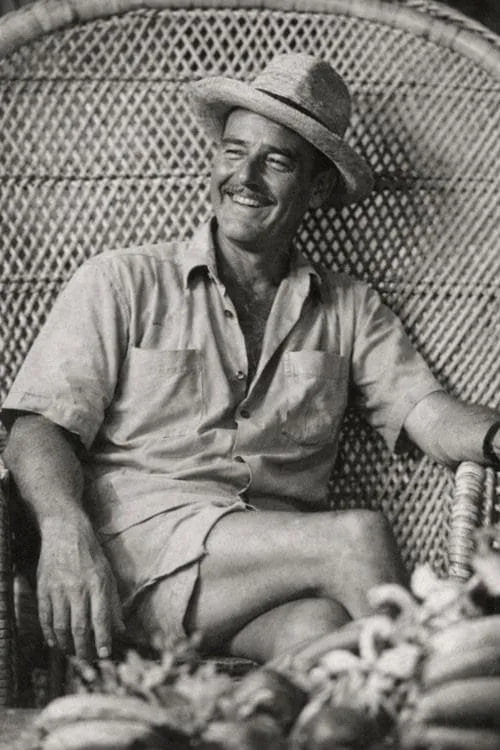
The Invention of the “Tiki Bar” (1933)
It all started with one man: Ernest Gantt, a veteran adventurer who called himself Don the Beachcomber. In 1933, at the end of Prohibition, he opened the first “Tiki” bar in Hollywood. His genius? Creating a total illusion.
He served strong rum cocktails (the famous Zombie) in a theatrical setting: fishing nets, bamboo, and carved fake idols. It was pure fantasy, but for the average American, it was the cheapest ticket to paradise.
The Golden Age of Hollywood: Escape to the South Seas
In the 1950s, America was at the height of its material glory. The average American had everything: a house, a car, money. But they also had stress, social pressure, and puritanical morals. They were suffocating.
Hollywood offered them the perfect escape: the myth of the South Seas. A world where you didn’t have to clock in at the factory and where love was free.
Three cult films have engraved this image in the global unconscious (and perhaps yours too?):
- 1. Mutiny on the Bounty (1935, 1962): Whether starring Clark Gable or Marlon Brando, this film sold the ultimate idea of rebellion: leaving everything behind to live on a beach with a Vahine. The cult scene: The ship’s arrival in Tahiti, greeted by hundreds of flower-covered canoes. [Watch the original trailer on YouTube](https://www.google.com/search?q=https://www.youtube.com/results%3Fsearch_query%3DMutiny%2Bon%2Bthe%2BBounty%2B1935%2Btrailer)
- 2. South Pacific (1958): This musical introduced the mystical island of “Bali Ha’i,” that forbidden and magical place that beckons sailors. The song Bali Ha’i captures this bewitching call of the horizon. Listen to the call of ”Bali Ha’i » on YouTube
- 3. Blue Hawaii (1961): The pinnacle of “Tiki Pop.” Elvis Presley, a ukulele, a wedding on a raft, and the song Rock-A-Hula Baby. It’s kitschy, it’s colorful, and it defined mass tourism for decades. See Elvis and the Tiki Pop style on YouTube
It was group therapy. The American Tiki was a toy, a grimacing cocktail glass to help you forget your bills.
The Bali Hai Boys, inventors of the stilt bungalow
The Bali Hai Boys were originally three Californians, all brothers from the University of Southern California fraternity, who had well-established careers in 1950s American society:
- Hugh Kelley: a lawyer in Los Angeles and sailing enthusiast. It was a trip in 1959, following a transpacific yacht race, that inspired him to escape to Tahiti.
- Jay Carlisle: stockbroker.
- Donald “Muk” McCallum: head of the family timber business.
Back to reality: the true face of*Ti’i*
But you, travelers to Anoe Tahiti, are not looking for a movie set. You have come in search of the real thing.
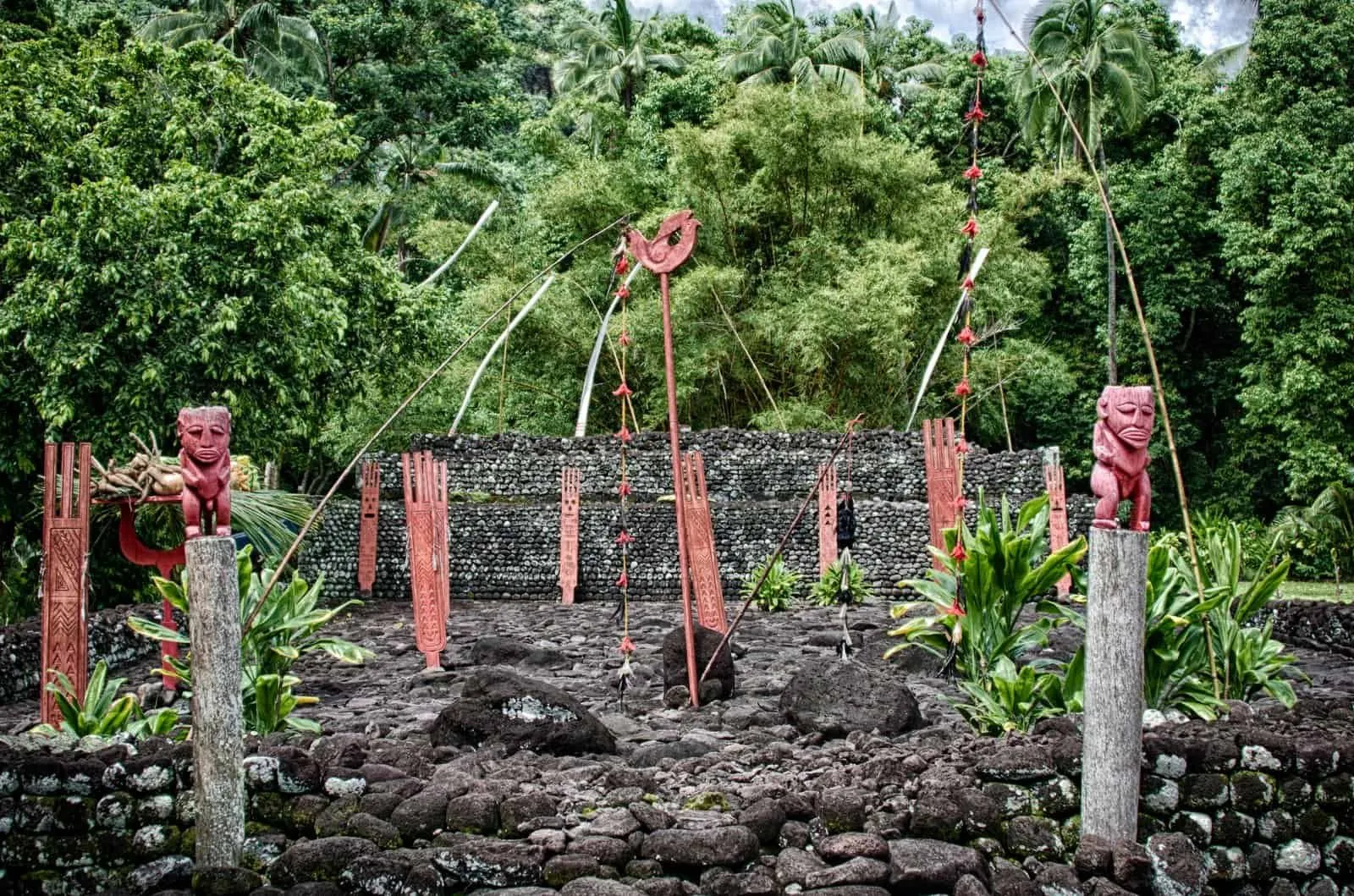
Here, forget the word “Tiki” (which is Marquesan) for a moment. In Tahiti, we talk about Ti’i. And it’s not a game.
More than just stone: an immobilized ancestor
The authentic Ti’i is not there for decoration. It is a receptacle.
Carved from basalt (volcanic rock, the blood of the earth), coral, or precious woods such as Tou (Oceanian walnut) or Miro (rosewood), it houses the Mana of an ancestor or protective god.
Unlike the smiling or comical Tikis found in American bars, our Ti’i often have:
- Hands on the stomach: Because it is there, in the gut, that emotions and knowledge reside, not in the head.
- A stretched, sometimes threatening mouth:To scare away evil spirits and protect a boundary (Tapu).
- Huge eyes: Symbolizing spiritual vision that transcends time.
The*Mana*: A physical experience
Standing in front of a real Ti’i in a valley, you can feel a “density” in the air. This is Mana.
It’s not magic, it’s connection. These statues remind us that we are only passing through, watched over by the demanding benevolence of those who came before us.
My advice: If you come across a stone Ti’i in the wild or on a >Marae, do not touch it. Not only out of respect for heritage, but because the Tapu (the sacred/forbidden) is powerful. Just observe, breathe, and give thanks (Māuruuru) for the welcome.
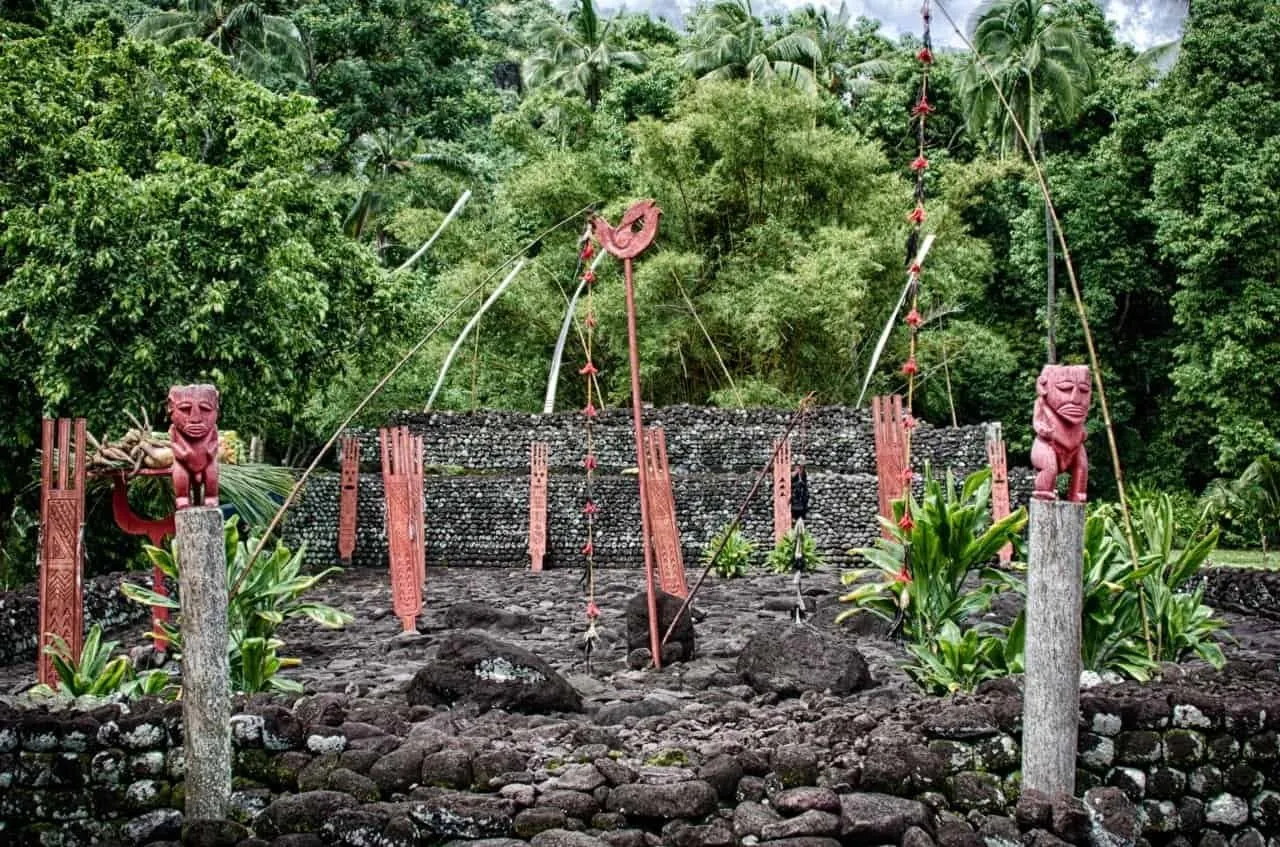
Where can you see authentic ruins in Tahiti?
If you want to swap plastic for volcanic rock and history, here are my personal recommendations for a respectful encounter.
- The Museum of Tahiti and the Islands (Te Fare Iamanaha)
- Level: Very Easy (Accessible to all, families, people with reduced mobility).
- The experience: Recently renovated, this museum in Punaauia houses priceless artifacts. You will see wooden and stone Ti’i, protected and preserved. It is the ideal starting point for understanding the diversity of styles between the Society Islands, the Austral Islands, and the Marquesas Islands.
- Anoe’s tip: Go in the morning to enjoy the cool air, and finish with a stroll through the botanical garden by the lagoon.
- Website: https://www.museetahiti.pf/
- The Marae Arahurahu (Paea)
- Level: Easy (Flat walking).
- The experience: This is undoubtedly the most beautiful restored marae (open-air temple) in Tahiti. Located in a lush green valley in Paea, the place exudes peace. You will find reproductions of Ti’i guarding the entrance.
- Impression: The natural acoustics of the valley and the darkness of the volcanic stone create a solemn atmosphere. It is a perfect place for meditation. Tahiti Tourism:
- https://www.tahititourisme.fr/patrimoine-culturel/marae-arahurahu/
- The Papenoo Valley
- Level: Intermediate (4×4 excursion or hike).
- The experience: In the heart of the island, this wild valley hides many archaeological sites. Here, nature has reclaimed its rights. The ruins are often covered with moss, blending into the forest.
- Caution: Never venture alone into the deep valley without a guide. The weather changes quickly. Tahiti Tourism:
- https://www.tahititourisme.fr/patrimoine-naturel/vallee-de-papenoo-maroto/
Which Tiki will you choose?
The Hollywood Tiki allowed the world to dream about us. It is fun, nostalgic, and part of history.
But the Ti’i from Tahiti will not only make you dream. It will make you grow.
It will reconnect you to the earth and to silence, far from the modern stress that Americans in the 1950s were already seeking to escape.
So, are you ready to turn off the TV and come feel the vibration of volcanic rock?
Written by Ruben Chang
Read next
6 min
Read next