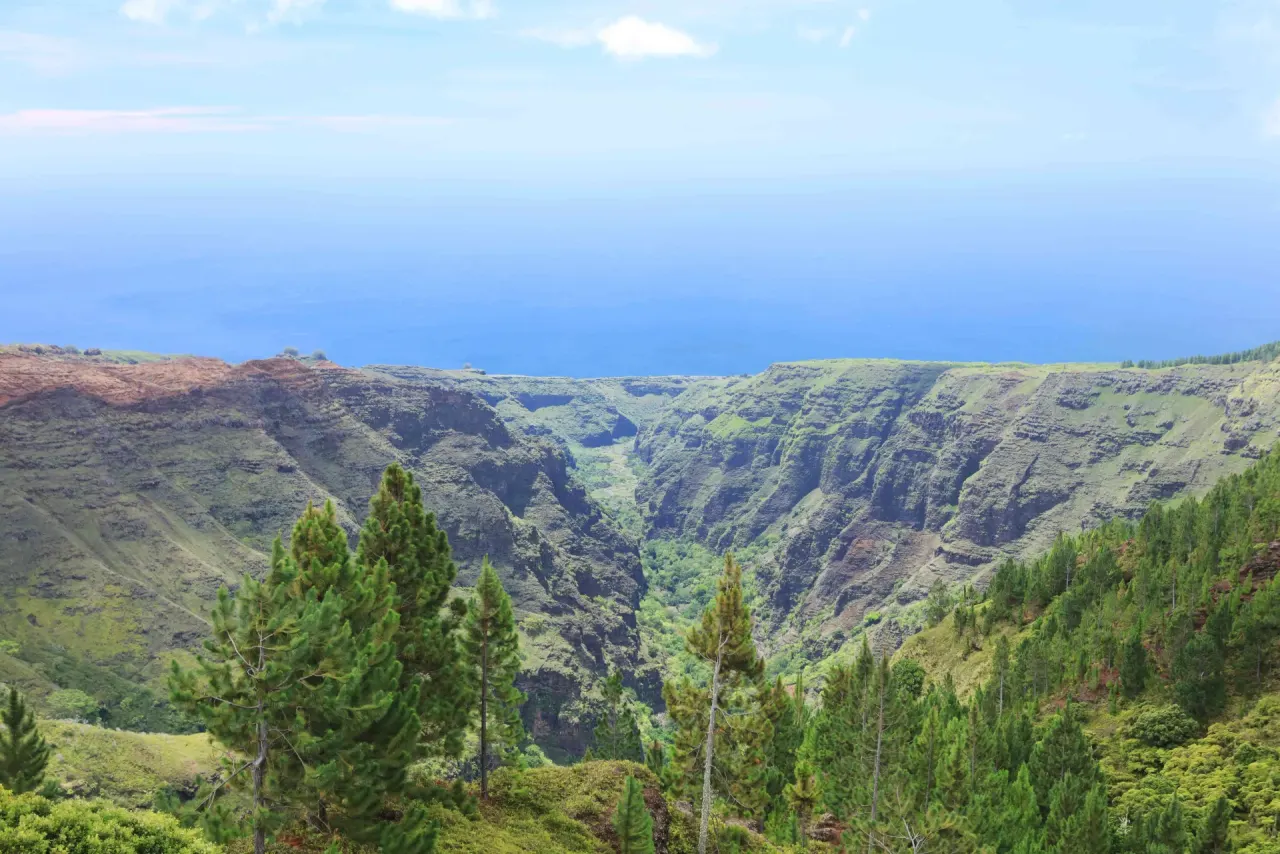
The largest island in the Marquesas is a land of towering cliffs, deep valleys, waterfalls, and archaeological treasures. Visitors explore ancient ceremonial sites, ride horses through dramatic landscapes, visit traditional villages, and experience one of the most rugged islands in the Pacific.
Nuku Hiva in pictures
Tahiti Tourisme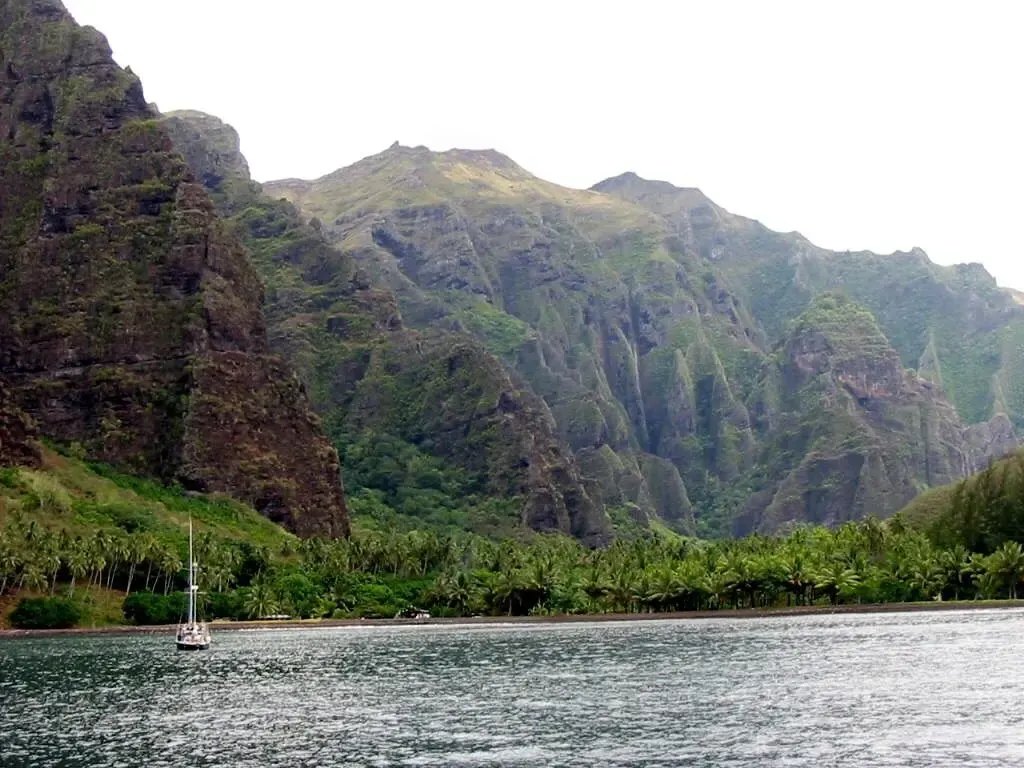 Tahiti Tourisme
 Tahiti Tourisme
Places on Nuku Hiva
2The Vaipo waterfall in the Hakaui valley of Nuku Hiva, about 350 m high, one of the tallest in the Pacific.
The Vaipo waterfall in the Hakaui valley of Nuku Hiva, about 350 m high, one of the tallest in the Pacific. You reach it by boat from Taiohae, then about two hours on foot up the valley.
A restored ceremonial site near Hatiheu, on the north coast of Nuku Hiva.
A restored ceremonial site near Hatiheu, on the north coast of Nuku Hiva. Stone platforms, a huge banyan tree and petroglyphs mark the place where the valley held its rites and gatherings.
In depth
Nuku Hiva: everything you need to know before you go
Flights, seasons, the Vaipo waterfall and the sacred valleys: planning the Marquesas' biggest island, far from any lagoon.
Nuku Hiva is a different Polynesia. No lagoon, no motu: instead, cliffs a thousand metres tall, valleys full of tiki, wild horses on the ridges. This is the largest of the Marquesas - Te Henua 'Enana, the Land of Men - and it rewards travellers who come for depth, not for a beach.
Where is it?
The Marquesas lie around 1,500 kilometres northeast of Tahiti - closer to the equator, and a world of their own. Taiohae, the main village and administrative centre of the archipelago, curves around a great bay that was once a volcano's caldera.
How do you get there?
Air Tahiti flies direct from Papeete in about three and a quarter hours - the longest domestic hop in French Polynesia. The other way is by sea, aboard the passenger-cargo ship Aranui, which supplies the archipelago and has become a voyage in its own right. One practical detail worth knowing before you land: the Marquesas run 30 minutes ahead of Tahiti time.
When should you go?
The Marquesas play by their own weather. Closer to the equator, they sit outside the main cyclone zone, and they often shine exactly when Tahiti gets its rains - November to April can be a fine season here. Rain comes in bursts all year and makes the valleys what they are: green.
What to do
- Reach the Vaipo waterfall. A boat ride along the cliffs from Taiohae, then a walk up the Hakaui valley between ancient stone platforms, to the foot of a 350-metre fall - one of the tallest in the Pacific. After rockfalls the final stretch is sometimes closed; your guide will know the current state.
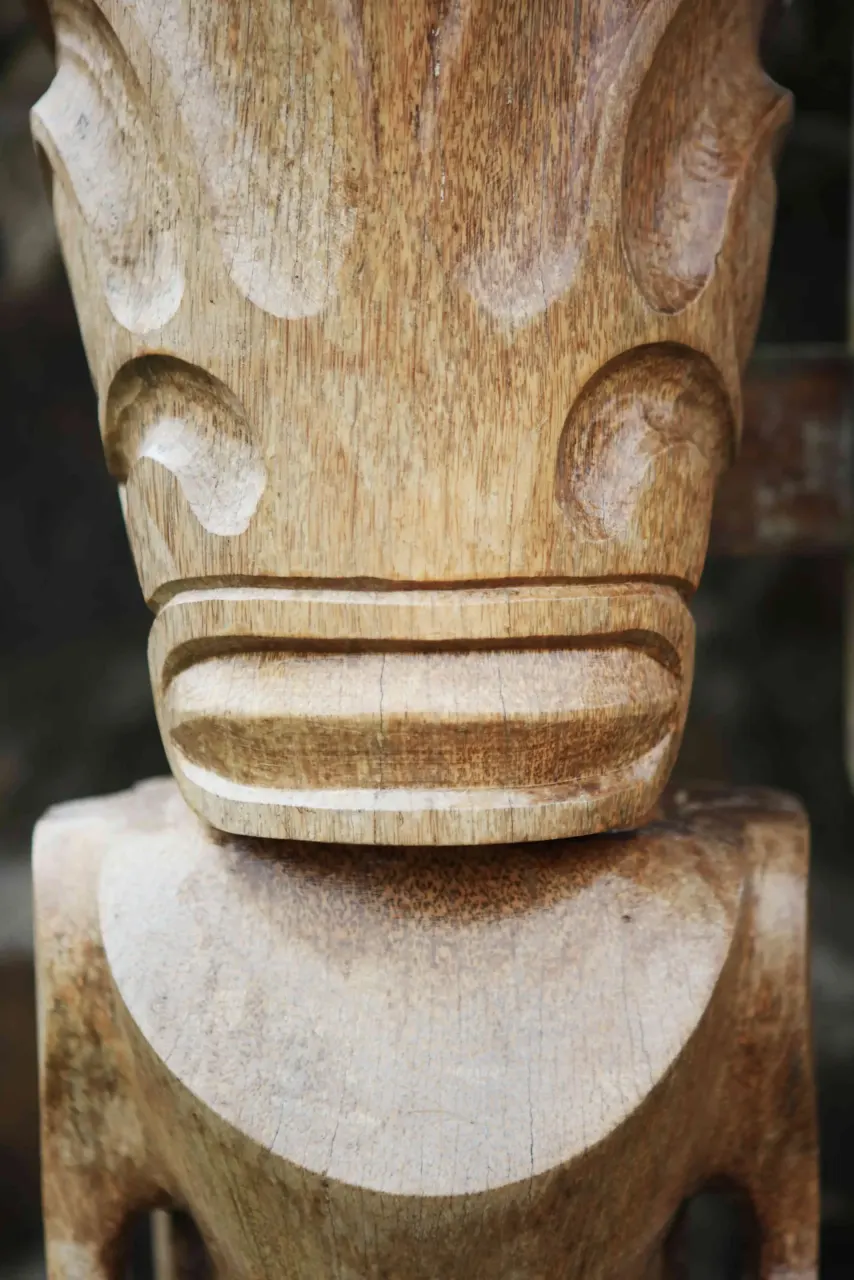
- Read the valleys. Taipivai - where Herman Melville jumped ship and set his book Typee - and Hatiheu, with the great me'ae (Marquesan sacred sites) and tiki of Kamuihei under the banyans. Go with a guide; these places are alive, not ruins.
- Cross the Toovii plateau. Pine forests, pastures and horses at altitude - a Polynesia nobody expects. On horseback if you can.
- Drive the island. The road from Taiohae over the ridges to Hatiheu is an expedition in itself: switchbacks, cliff views, and a coastline with no reef to soften the swell.
- Meet the carvers. Marquesan carving - wood, stone, bone, and the tattoo tradition that spread from here - is the most admired in Polynesia. Workshops in the villages sell what they actually make.
Where to stay
Taiohae has the pensions, the shops and the pier; it is the natural base. A few simple lodges sit in the other valleys for travellers who want the silence. Services are few everywhere - that is the deal, and the reward.
Is Nuku Hiva for you?
Nuku Hiva is for travellers drawn by raw nature, deep culture and real distances - hikers, riders, history readers. It is not a lagoon holiday: there is no reef ring, the sea is open, and beaches are few and dark-sanded. It asks time (three days is a minimum), some planning, and a taste for places that do not perform for visitors.
Practical tips
- Set your watch: the Marquesas are 30 minutes ahead of Tahiti.
- Book excursions through your pension - hosts and guides work hand in hand here.
- Bring proper walking shoes and rain protection; valleys are muddy after showers.
- On some beaches tiny sandflies called nono bite hard - repellent is not optional.
- Cash covers most village purchases; do your banking in Taiohae.
That is Nuku Hiva.
3 guides